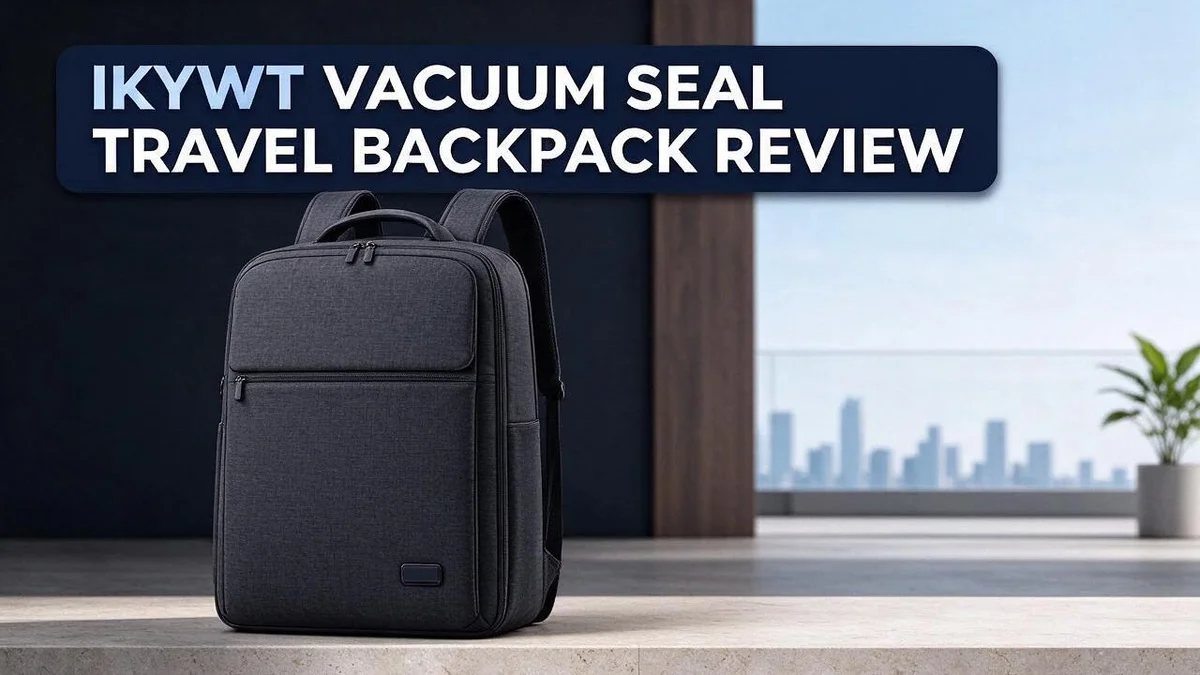
IKYWT Vacuum Seal Travel Backpack Review 2026: Hit or Miss?
Packing for a trip often feels like a battle with your own suitcase. Clothes pile up, zippers strain, and space runs out fast.
The IKYWT Vacuum Seal Travel Backpack wants to fix that problem. It has a vacuum seal compartment with an airtight zipper. The brand claims it saves up to 80% of clothes storage space.
The listing shows an 80L capacity. Other versions appear in a 60L size and a 25L to 60L expandable option. The Amazon listing mentions 900D TPU fabric and SBS zippers.
Shoppers rate it 4.2 out of 5 stars across 60 reviews. In this review, you will see how the pack works, what it does well, and who should consider it.
In a Nutshell
-
Vacuum seal compartment: The pack has a special section with an airtight zipper. It pushes extra air out of your clothes. The brand claims you can save up to 80% of clothing storage space.
-
Expandable design: Some sources mention a 25L to 60L expandable capacity. You can pack light for short trips. You can add room for longer ones.
-
Build quality: The Amazon listing mentions 900D TPU fabric and SBS zippers. Another source says waterproof nylon, so check the material details before you buy. Buyers describe the bag as water resistant and durable.
-
Everyday perks: Shoppers call it a space saver and a time saver. They also say it helps keep the home cleaner.
-
Size mix up: Sources list a 60L version alongside the larger one. Double check the size on the page before you order.
-
Drawbacks and alternatives: The research found no stated cons. It names no direct competitors. The same brand also sells ARIEVAC packing cubes if you want extra organization.
Capacity and Size Options

Last update on 2026-10-31 / Affiliate links / Images from Amazon Product Advertising API Some of the links on this website are affiliate links, which means that at no additional cost to you, I earn a commission if you click through and make a purchase. I only recommend products and services that I believe will add value to my readers. Thank you for your support!
Think about your trip length before you pick a size. A weekend away needs far less room than a month abroad. Most people find that a smaller setup feels lighter on the shoulders.
Ask yourself how often you fly. Airlines set strict limits on carry on bags. A pack that fits the overhead bin saves you from gate checks and waiting at the carousel.
Light packers often choose the smaller setting. They pack fewer items and roll clothes tightly. This approach keeps the bag easy to carry through busy train stations.
Heavy packers or families may need more room. A larger capacity handles bulky jackets, shoes, and extra gear. Pack the heaviest items close to your back for balance. Just remember that a full bag gets heavy fast.
Measure your usual luggage first. Compare your favourite outfits and shoes to the stated dimensions. Lay everything on the floor to see how much space you truly need.
Think about where you store the bag at home too. A compact pack slides under a bed or into a wardrobe shelf. A bigger one may take up valuable closet space.
Vacuum sealing works best when you plan your packing list. Sort clothes by type before you seal them. Compress bulky items like coats first, then fill gaps with socks and tees.
Leave a little spare room in the bag. Extra space makes zipping easier and gives you room for souvenirs on the way home.
Check the seller page before you buy. Product details can differ between listings. Confirm the exact measurements and weight limits so the bag matches your travel style. Taking time now saves stress later.
Materials and Build Quality
Materials play a big part in how a travel bag holds up over time. The sources do not agree on the outer fabric. One source lists TPU, while another describes waterproof nylon. Both choices often handle rain and light spills well.
Fabric type also affects daily cleaning. Coated surfaces often wipe clean with a damp cloth. That helps after a muddy airport walk or a rainy day out. Dirt rarely soaks deep into the surface.
Seams and stitching show build quality too. Check the handles, base, and corners when the bag arrives. Look for neat, even stitching. Press firmly on the corners to see if they hold their shape.
Zippers need a close look as well. Run each one slowly along its full length. A smooth glide suggests solid construction. Catching or snagging is a sign to contact the seller.
Test the airtight zipper before your first trip. Close it slowly around all edges. A complete seal helps the vacuum section work as expected. A quick check before each trip saves time later.
Care routines help the materials last longer. Let the bag dry fully before storing it. Avoid packing it far beyond its comfortable limit, since extra strain can stress seams and zippers.
Heavy items deserve thoughtful placement too. Keep dense shoes or toiletries closer to the back panel. Weight kept near your body feels easier to carry on long walks. This simple habit protects the frame and helps the pack keep its shape.
Read the material details on the product page before you buy. Listings can differ, so compare the wording across sellers.
Vacuum Seal Compartment Performance
The vacuum seal compartment works as its own zone inside the pack. Your clothes stay apart from shoes, toiletries, and electronics. That split keeps your gear neat from departure to arrival.
Many travellers fold shirts before they seal them. Rolling soft items like socks and tops can also help. Try both methods on a short trip and see which one suits your style.
Give the seal some room to work. Fill the compartment with soft, bendable clothes. Avoid packing hard objects like books or shoe soles inside, because they can press against the seams.
Think about what you want to keep dry. The compartment separates clean outfits from damp swimwear or wet towels. Store wet items in another section so they never touch your sealed clothes.
When you arrive, open the compartment in a dry room. Lay the clothes out for a few minutes. This lets the fabric loosen and smooth out before you wear it.
The listing claims savings of up to 80% on clothes storage space. Your real results will depend on what you pack. Bulky knitwear usually compresses more than denim or thick jackets. Test your favourite items at home first, so you know what to expect.
Top 3 Alternatives
Looking for a different style of pack? These three options each suit frequent flyers and weekend trips. Read on to see how they compare.
Osprey Farpoint 40


Last update on 2026-11-02 / Affiliate links / Images from Amazon Product Advertising API Some of the links on this website are affiliate links, which means that at no additional cost to you, I earn a commission if you click through and make a purchase. I only recommend products and services that I believe will add value to my readers. Thank you for your support!
Many travelers choose the Osprey Farpoint 40 for its easy access. A front panel zipper opens the main compartment, so you can grab items without unpacking everything.
It also includes a padded laptop sleeve and a hip belt. The hip belt shifts weight off your shoulders during long airport walks.
Tortuga Setout Backpack
No products found.
The Tortuga Setout Backpack appeals to people who like organized packing. Its clamshell design opens wide, so every pocket stays visible at once.
The outer shell resists light moisture, which helps protect clothes during sudden rain. Many frequent travelers also appreciate its carry-on friendly size.
Peak Design Travel Backpack

Last update on 2026-10-29 / Affiliate links / Images from Amazon Product Advertising API Some of the links on this website are affiliate links, which means that at no additional cost to you, I earn a commission if you click through and make a purchase. I only recommend products and services that I believe will add value to my readers. Thank you for your support!
The Peak Design Travel Backpack suits photographers and gear-heavy travelers. Adjustable dividers keep cameras, cables, and laptops in place.
Its weather-resistant fabric handles rain well. An expandable design also adds room for souvenirs on the way home.
Each pick offers a different balance of access, organization, and protection. Choose the one that matches your travel style best.
Water Resistance and Durability
Water resistance matters more than many travellers expect. A sudden shower can soak a bag during a short walk to the airport.
The research describes the outer material in two different ways. One source uses the phrase waterproof nylon. The sales listing points to a different fabric.
Water resistant bags handle light rain well. They may let moisture through during a heavy downpour or long exposure. Treat this bag as protection, not a complete shield.
Drying matters just as much as the fabric. Always dry the bag fully before you store it. Trapped moisture can lead to odours and mildew over time.
Air dry the bag in a shaded spot. Direct sunlight can fade colours and stress materials, so avoid leaving it on a hot balcony.
Durability depends on daily habits too. Heavy loads, rough handling at the airport, and overpacking all put strain on the straps and handles.
Lift the bag by its main handle. Dragging it by one strap adds stress to a single point.
Shoppers give the bag 4.2 out of 5 stars from 60 reviews. That score suggests many owners feel happy with their purchase.
The sample is still modest, though. Search reviews for comments about rain, wear, and long term use.
Store the bag somewhere dry between trips. Avoid damp basements and hot car boots, since heat and moisture can weaken adhesives and fabric over time.
Ask the seller about the exact material before you buy. A clear answer shows you what the bag can handle in wet conditions.
Good care turns a useful bag into a reliable travel companion. Watch for small signs of wear early, such as loose threads or stiff zips, and act fast.
Comfort and Carrying Experience
Comfort matters more than most travellers expect. A bag can look great and still tire your shoulders by the end of a long day. Carrying comfort decides how the bag feels in real life.
The vacuum seal changes the shape. Once you press out the air, packed clothes sit flatter and firmer. A flatter load often rests closer to your back, which can make the pack feel more stable.
Airports and train stations ask a lot from any bag. You may climb stairs, squeeze through crowds, and lift the pack onto overhead racks. A pack that stays close to your body makes these moments far easier.
Stretching any bag to its limit can make it feel stiff. A full expansion may pull unevenly on your shoulders and hips. Try a lighter load first and add items slowly.
Warm weather adds another test. Any pack can trap heat against your back on a sunny day. Take short breaks in shade and let the bag cool before you move on.
Test comfort at home first. Fill the bag with a realistic load and walk around for ten minutes.
Notice where the straps press and whether the weight pulls to one side. Small problems at home often grow into big problems at the airport.
Good comfort also depends on how you move. Set the bag down often on long walks and switch shoulders when you can. Your arms will feel fresher by the end of the day.
Comfort is a personal choice. Your height, back, and packing style all shape the result. Try the bag yourself when you can, and trust how it feels on your own shoulders.
Value for Money and Customer Ratings
Ratings give you a quick look at what other owners think. The IKYWT backpack has a rating of 4.2 out of 5 stars from 60 reviews. That score points to a generally positive experience.
A score alone does not tell the full story. Sixty reviews is a small group. A few very happy or very unhappy buyers can shift the average, so read the newest comments too.
Look for patterns in what people write. If several owners praise the same strength, that detail carries weight. If many mention the same problem, take it seriously.
Pay attention to who wrote each review. A frequent traveller can judge the zips and seams well. Someone who took one short trip may judge differently.
The research lists no clear cons. That gap is worth noting. Reviews often reveal drawbacks that a product page leaves out. Scan the middle ratings, since they tend to describe both good and weak points.
Compare the rating with your own needs. Ask how often you will travel. Think about whether you need a large bag or a smaller one for short trips. A strong rating means little if the size does not suit your plans.
Check the return policy before you commit. A clear return window lets you test the bag at home. That step gives you peace of mind and helps you judge the fit for yourself.
Final thought: ratings guide you, but your own test decides. Use the score as a starting point, then trust your experience with the bag.
Pros and Cons
Pros
- Claims to save up to 80% of clothes storage space
- Vacuum seal compartment keeps packed clothes compressed
- Expandable capacity suits both short and longer trips
- Uses SBS zippers for the main closures
- Helps keep your home cleaner by containing clothes
Cons
- Listed capacity differs between 80L and 60L
- Outer material is described in two different ways
- Research does not explain how the vacuum seal works
- No cons appear in the research, so check more owner feedback
Who Should Buy It
This vacuum seal travel backpack suits some travellers better than others. It works well for people who need extra room without carrying a heavy suitcase.
Frequent weekend trippers often gain the most. They can pack in minutes and switch between hotels without repacking a full suitcase.
Students moving between home and campus may also find it useful. A vacuum seal compartment keeps winter jumpers compact during term breaks.
Minimalists who value a tidy home will appreciate the storage side. Clothes stay contained, so the bag does not spill across the bedroom floor.
Airline size rules vary from one carrier to another. Measure the bag against your airline limits before you book.
Hikers and daily commuters may like the water resistant shell. It guards clothes during sudden showers on the way to the station.
Shoppers who want a rigid case may prefer a hard shell suitcase instead. This bag relies on soft fabric and the vacuum seal rather than firm walls.
People who rarely pack more than a few items may find the bag too large. A smaller daypack could serve them better.
Long stay travellers who share a trip with a partner should plan ahead. Each traveller can carry one bag, which keeps packing simple for both partners.
Business travellers who change cities each week may value a bag that stays neat in transit.
In short, this bag fits people who travel often and want more space. Trying it on a real trip will show whether it suits your routine.
Keep a short list of your typical trips before you choose. Match that list to the features you need most, such as space or water resistance.
Final Verdict
The IKYWT Vacuum Seal Travel Backpack offers a clever answer to a common packing problem. It gives you a bag that compresses clothes and keeps your load compact. That idea alone makes it worth a close look.
The bag shines for people who overpack. It turns a bulky pile of clothes into a smaller bundle. You then carry less volume on your back.
The vacuum seal compartment is the strongest selling point. It sets this pack apart from a standard backpack. Most travel bags simply hold your clothes. This one also shrinks them.
A few details still need your attention. The sources disagree on size and fabric. Ask the seller to confirm the exact model before you order.
Think about how you travel. If you pack light, a regular bag may serve you fine. If you often run out of room, this pack deserves a place on your shortlist.
Also think about the extra steps. Vacuum packing adds a task to every pack and unpack. Some people enjoy the routine. Others find it slows them down.
Here is a simple way to decide.
Choose it if you want more room without a larger bag. Skip it if you prefer quick, no fuss packing. Wait if you need a guaranteed cabin fit for strict airlines.
Our verdict: a smart, practical pick for the right traveller. It earns a recommendation for people who pack heavy and value space. Buy it with clear expectations, confirm the final specs, and test it on a short trip first.
Frequently Asked Questions
Can I use it as an everyday backpack?
It can handle daily trips, but the research does not mention a laptop sleeve or a dedicated work pocket. Check the product page for those details before you rely on it for work or school. Short commutes with a light load should feel comfortable.
How should I pack it for the best results?
Fold your clothes neatly and place the heaviest items near the back panel. Fill the vacuum compartment first, then close the AIR-TIGHT zipper slowly so air can leave the bag evenly. Keep the load balanced to ease strain on your shoulders.
How do I keep it clean after trips?
Wipe the outer shell with a damp cloth and a little mild soap. Let it dry fully before you store it, so trapped moisture does not cause odours. Check the care label for any extra steps.
What should I test before my first trip?
Pack a small load and seal the compartment at home first. Check that every zipper closes fully and that the clothes stay compressed. A quick test shows you any weak spots early, so you can fix them calmly.

Hi, I’m Marie Bennett, the founder of PackSmart.blog.
I write about travel essentials and Amazon gear reviews to help you pack smarter and travel lighter.
From must-have accessories to space-saving gadgets, I test and share what truly works on the road.
My mission is to make every trip stress-free and organized for travelers like you.
Join me as I explore smarter ways to travel—one bag at a time.