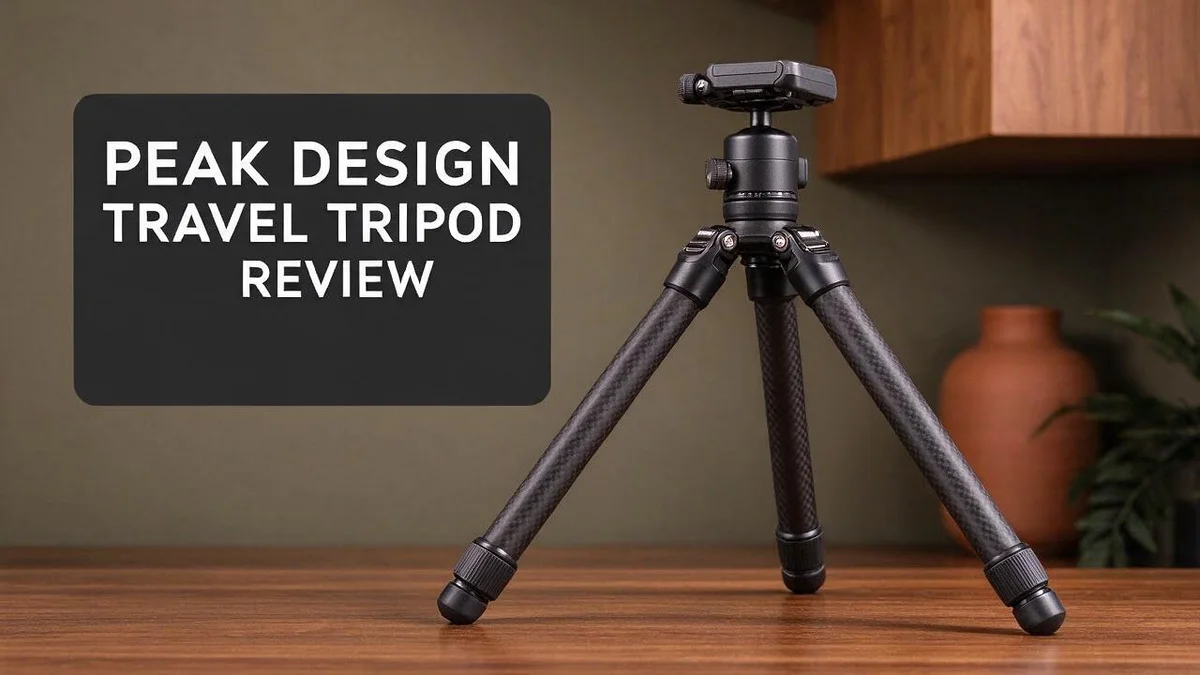
Peak Design Travel Tripod Review 2026: Is This Worth It?
Do you want a travel tripod that packs small and still holds heavy gear? The Peak Design Travel Tripod promises exactly that. This review tests that promise.
The tripod comes in carbon fiber and aluminum versions. It supports 20 lb (9 kg), so it handles full frame DSLRs with long telephoto lenses. The anodized finish resists weather, rust, and saltwater.
Photographers praise its compact size, quick setup, and good vibration damping. Some users note average stiffness and a slight sideways flex. Setup also takes a little practice.
Let’s look at how it performs, who should buy it, and how it compares to rivals like the Ulanzi F38 and Leofoto MT-04 Mini.
In a Nutshell
-
Strong load rating: The tripod holds 20 lb (9 kg). That suits full frame DSLRs with telephoto lenses. Users report no wobble at the rated load.
-
Weather ready: The anodized finish resists rust and saltwater. The parts handle rain, sand, and coastal trips well.
-
Weight difference: The carbon fiber model feels much lighter on long hikes. The aluminum model weighs more but gives you the same core design.
-
Average stiffness: Rigidity sits at a typical level for travel tripods. One user noticed a slight lateral stiffness shortfall, even with a fluid head.
-
Learning curve: Setup takes some practice at first. The level bubble is hard to see, so check your horizon with care.
-
Best fit: This tripod suits travelers who shoot heavy gear and want a well made support. Photographers who want other options can compare it with the FTF Gear Tripod.
Design, Build Quality and Weather Resistance

Last update on 2026-11-23 / Affiliate links / Images from Amazon Product Advertising API Some of the links on this website are affiliate links, which means that at no additional cost to you, I earn a commission if you click through and make a purchase. I only recommend products and services that I believe will add value to my readers. Thank you for your support!
Pick up the Peak Design Travel Tripod and the build quality stands out fast. The parts feel precisely machined, and the joints move with a smooth action.
Every part gets weather protection. The design goes beyond the finish, so the whole tripod handles damp days and beach trips with ease, even on long coastal shoots.
Material choice shapes the feel. The carbon and aluminum versions feel different in hand, not just on the scale. Hold both if you can before you decide.
Lateral stiffness is the main weak spot. Some users report slight side to side give, even with a fluid head. Test it first if you pan often.
The level bubble needs better light. Many users find it hard to read, which slows leveling on uneven ground. A quick check in a store helps.
Lock quality matters a lot. Rival models like the Ulanzi F38 drew reports of locking mechanism failures. Test the leg locks before you commit to a purchase, especially on a rough test day.
The design favors simplicity. Few extras mean fewer parts that can fail. Fewer parts also means fewer spots for dust to collect. Some shooters will miss add-on features, but many travelers prefer this approach.
Maintenance keeps joints smooth. Wipe grit off the legs after beach days and check the locks now and then. Small habits keep the tripod working well for years.
Field tip for stability. Spread the legs wide and keep the center column low when shooting in wind. This habit helps offset the lateral give.
Overall, the build suits careful shooters. Give it regular checks, and it should serve you for many trips.
Stability, Stiffness and Vibration Damping
Stability matters most when you shoot with long lenses. A wobbly base can ruin a sharp photo before you press the shutter. This section looks at how the Peak Design Travel Tripod holds steady in real use.
Stiffness controls how the tripod reacts when you touch the camera. Even a light tap can send shake through the legs. Keep your hands off the body during long exposures for the best results.
Vibration damping calms the small shakes that remain after setup. Users often note that the legs absorb tremors from wind and footsteps. This quality helps most with telephoto lenses and slow shutter speeds.
Leg angles change everything. Spreading the legs wide lowers the center of gravity and creates a firmer base. Keep the center column low, because a raised column acts like a lever and magnifies movement.
Ground matters too. Soft sand or mud can let one leg sink, so place the feet on firm soil or rock when possible. Uneven ground also tilts the frame, so check the angle before each shot.
Wind is the biggest enemy outdoors. Adding a bag of gear to the base adds weight and cuts down on sway. This trick works well on gusty beaches or open ridges.
Lock checks matter before every shoot. Tighten each leg section firmly and recheck it after packing. A loose lock lets the legs creep, which can cause a slow sink during a shot.
Good habits make a big difference. Mount the camera with a secure plate, and use a remote or timer to avoid touching the shutter. Small steps like these keep images sharp, even on the windiest days.
Portability and Packed Size
The Peak Design Travel Tripod folds down into a compact package. Many photographers find it easy to slip into a daypack or a carry on bag.
Packed size changes how often you bring a tripod. A large tripod often stays at home. This model fits into tight spaces, so you can carry it on long walks, city tours, and early morning trips without much effort.
Folded length matters more than many people expect. A short tripod leaves room for extra lenses, batteries, and filters. You can balance your gear better when the support takes up less space.
Overhead bins and overstuffed backpacks make space a real issue. Compact gear helps you stay under airline size limits. It also keeps your hands free at airport gates and train stations.
Easy carry options help too. Try a side pocket or a bag strap to carry it on busy streets. Its compact shape keeps it out of the way while you walk, climb stairs, or ride transit.
Setup time also affects portability. A tripod that opens fast saves you from fumbling at a scenic lookout. Practice the leg locks at home first. Then you can unfold and fold the tripod with confidence on location.
Keep the legs clean before storing them. Sand and salt can build up in the joints and make packing harder. A quick wipe after a beach day keeps the tripod ready for the next trip.
Store it in the same pocket each trip. You will never waste minutes searching during a sunrise shoot.
Overall, this tripod suits people who want support without a heavy pack. Its small folded size makes it easy to bring on every trip.
Top 3 Alternatives
The right travel tripod depends on your style of shooting. These three options each bring something different to the table.
Manfrotto BeFree Advanced


Last update on 2026-11-23 / Affiliate links / Images from Amazon Product Advertising API Some of the links on this website are affiliate links, which means that at no additional cost to you, I earn a commission if you click through and make a purchase. I only recommend products and services that I believe will add value to my readers. Thank you for your support!
The Manfrotto BeFree Advanced suits everyday travelers. It folds down small and fits easily inside a backpack.
Its lever locks make setup quick. You can use it for photos, video, and vlogging on the go.
The aluminum build keeps weight low while still feeling sturdy.
Gitzo Traveler

Last update on 2026-11-23 / Affiliate links / Images from Amazon Product Advertising API Some of the links on this website are affiliate links, which means that at no additional cost to you, I earn a commission if you click through and make a purchase. I only recommend products and services that I believe will add value to my readers. Thank you for your support!
The Gitzo Traveler suits photographers who want premium build quality. It uses carbon fiber legs that stay light and stiff.
Its solid construction handles heavy cameras and long telephoto lenses with ease. Many pros trust it for landscape and wildlife work.
If you shoot in rough weather, this option gives you extra peace of mind.
Joby GorillaPod 3K

Last update on 2026-11-23 / Affiliate links / Images from Amazon Product Advertising API Some of the links on this website are affiliate links, which means that at no additional cost to you, I earn a commission if you click through and make a purchase. I only recommend products and services that I believe will add value to my readers. Thank you for your support!
The Joby GorillaPod 3K takes a different approach. Its flexible legs wrap around poles, railings, and tree branches.
This design helps you shoot from angles that standard tripods cannot reach. It works well for action cams and small mirrorless setups.
Pack it in your bag and get creative with every shot.
Setup Speed and Ease of Use
Setup speed decides whether you actually get the shot. The Peak Design Travel Tripod opens in a few simple moves. Your first attempts may feel slow, and that is normal.
Most people find the process clicks after a few uses. Your hands learn the order of each step. Muscle memory then does much of the work for you.
Run a dry setup at home before your trip. Open and close the legs five or six times in your living room. This builds confidence before you reach a windy beach or a crowded viewpoint.
Cold weather changes the game. Thick gloves make small parts harder to grip. Practice with gloves on so you know what to expect in winter.
Low light adds pressure. Sunrise and sunset shots often leave little time. A smooth routine helps you set up while the sky keeps changing.
Keep your routine the same every time. Follow one set of steps for every shoot. Fewer surprises mean fewer mistakes, so you stay calm when the light moves fast.
Compare setup with your other options. Bigger tripods may feel sturdier, yet they often take longer to open. This tripod trades a little bulk for speed, which suits travelers who move often.
Ease of use also depends on your camera gear. A heavy setup makes every step feel harder. A lighter body and a lens that balances well keep the tripod easy to handle.
Bottom line: the tripod rewards patience. Once you learn the routine, setup becomes quick and almost automatic. Practice turns a tricky first session into a smooth habit.
Carbon Fiber vs Aluminum Models
Choosing between carbon fiber and aluminum depends on how you carry and use your tripod. Both models share the same basic design. The biggest difference lies in weight.
The carbon fiber model is significantly lighter. You feel that gap on long hikes. A lighter load means less strain on your shoulder after a full day outside.
Aluminum takes the opposite path. It weighs more, yet many photographers trust it for everyday shoots. The extra heft can feel steady when you mount a heavy camera.
Both versions support the same rated load. That means a full frame DSLR with a telephoto lens works on either model. You do not need to give up capacity to save weight.
Stiffness deserves a closer look. Reviewers describe stiffness as roughly average for travel tripods. Some users also report a slight lateral shortfall, even with a fluid head. Keep that in mind if you shoot panoramas or want extra steadiness.
Think about your daily routine first. If you walk far between shooting spots, carbon fiber makes sense. If you mostly shoot near your car or home, aluminum may serve you well.
Your travel style also matters. City trips with tight luggage limits favor the lighter build. Road trips with plenty of cargo space give aluminum more room to shine.
The best pick is the one you will carry every time. A tripod that stays in the closet helps no one.
Load Capacity and Compatible Camera Gear
Load capacity tells you how much weight a tripod can hold. The Peak Design Travel Tripod supports up to 20 lb (9 kg). That limit covers most camera setups you will carry outdoors.
The tripod suits full frame DSLRs with telephoto lenses. Many photographers pair it with this type of gear. The rated load gives you room to work without worry.
Add up the full weight before you head out. Include the camera body, lens, plate, and any flash or microphone. A heavy zoom lens can add more weight than you expect.
Mirrorless cameras usually weigh less. They pair well with this tripod. A smaller body and a compact lens leave extra margin for accessories.
A fluid head adds weight above the legs. Some users report a slight lateral shortfall with a fluid head. If you pan often during video, test your setup first.
Stiffness sits at about average for travel tripods. Long lenses magnify small movements. Keep the center column low when you shoot with heavy glass.
A ball head often gives a simpler hold for still photos. It also keeps the load balanced over the legs. Check that the lock feels firm before you walk away.
Stay within the rated limit for the best results. Overloading any tripod can lead to wobble or slow drift. Match your gear to the tripod, not the other way around.
Heavy setups also need a steady stance. Spread the legs wide on uneven ground. This small step improves stability in any weather.
Think about your typical kit. Pick a tripod that fits the gear you use most. Most kits fall well within this range. Plan for a little extra space for filters and spare batteries.
Pros and Cons
Pros
- Vibration damping helps keep shots sharp in breezy conditions.
- Weatherproof parts handle rain, dust, and salt air.
- The rated load holds steady without visible wobble.
- The build feels solid and well put together.
- Compact folded size slips easily into a daypack.
Cons
- Side to side flex can show up with a fluid head.
- The level bubble is tough to read in dim light.
- Some rivals, like the Ulanzi F38, have reported locking issues, so check reviews before you compare.
Who Should Buy It
This tripod suits photographers who travel light but still want solid support. It fits hikers, city explorers, and weekend road trippers who carry a camera every day.
Hobby photographers with a full frame body and a telephoto lens will feel at home here. The tripod works well for people who want one reliable support for many trips.
Beginners can also benefit from this design. The learning curve is real, so practice at home first. Once you know the steps, the tripod opens quickly and feels calm in the field.
Parents who photograph kids at sports fields also fit the profile. A compact stand packs into a bag and stays out of the way.
Video shooters may want to look elsewhere. Side to side flex can show up with a fluid head, so smooth pans may suffer. Anyone who needs rock solid panning should test it before a big shoot.
Photographers who shoot mostly from a car or a studio may not need this kind of portability. A heavier tripod can offer extra stability when weight does not matter.
Lighter camera setups also change the picture. If you use a small mirrorless body with a compact lens, you may never reach the full load capacity. In that case, a smaller tabletop option could serve you well.
Note that this tripod is not built for massive gear. Pros with heavy cinema rigs should look at larger models.
Still, the best buyer is the person who will actually carry it. A tripod that stays at home does no good on a sunrise hike. Pick the one you will use most often.
Final Verdict
The Peak Design Travel Tripod earns a strong recommendation for travelers who value portability. It delivers a dependable mix of size, speed, and build quality.
Setup takes practice, so try it at home first. Learn the leg locks and the head before your trip. A few practice runs save you stress at a busy viewpoint.
The two models give you a clear choice. Carbon fiber suits long days on foot. The aluminum version suits people who drive between stops and care less about shaving weight.
Think about the trips ahead. City breaks, hiking weekends, and long flights all suit this tripod. It rarely feels like a burden in your bag.
Compare a few rivals before you decide. The FTF Gear Tripod is one option worth a look. The Leofoto MT-04 Mini fits a different need, since it works as a tabletop pick.
That tabletop class gives you less height. It also gives you less reach over uneven ground. A full size travel tripod keeps more framing options open.
Peak Design wins on thoughtful design. Every part feels planned, and the whole kit packs down with little fuss. You notice the care each time you set it up.
It does not win every category. Stiffness stays average, and the level bubble asks for patience. Accept those trade offs, and the tripod rewards you.
Over time, steady use builds confidence. You learn the quirks, and the quirks fade. After a few outings, the setup feels natural.
Our final take is simple. Buy it if you want a compact, well built support that you will bring on every trip. Skip it if you need maximum rigidity above all else.
Frequently Asked Questions
Can I use this tripod with a mirrorless camera?
Yes, it works well with mirrorless bodies. Most mirrorless setups weigh far less than the 20 lb rating, so you get extra margin. A smaller lens keeps the setup steady and easy to carry.
Which model is better for long hikes?
The carbon fiber model suits long hikes best. It saves weight on every mile. Choose the aluminum model if you shoot mostly near the car and weight matters less.
How do I keep my photos sharp at night?
Lock every leg tight before you shoot. Keep the center column down, since a lower setup sits steadier. Use a remote shutter or a timer so your finger does not shake the frame. Even a light breeze can move long exposures, so block the wind with your body.
How should I clean it after a beach trip?
Rinse the legs with fresh water after salt spray. Wipe each joint dry with a soft cloth. Then open the legs and let them air dry fully. This habit keeps the locks moving smoothly over time.
Will it fit in a carry-on bag?
Usually, yes. Measure the folded length against your airline’s size limits before you fly. Most travelers pack it with the legs collapsed and wrapped in clothing for padding. Always check your airline’s rules before you travel.
Hi, I’m Marie Bennett, the founder of PackSmart.blog.
I write about travel essentials and Amazon gear reviews to help you pack smarter and travel lighter.
From must-have accessories to space-saving gadgets, I test and share what truly works on the road.
My mission is to make every trip stress-free and organized for travelers like you.
Join me as I explore smarter ways to travel—one bag at a time.