How Many Oz of Liquid Can You Bring on a Plane?
Packing for a flight should be simple, but liquids always seem to cause confusion at the airport. You stand in the security line wondering if your shampoo is too big or if your moisturizer will get tossed in the bin.
The answer is 3.4 ounces per container, but that one number does not tell the full story. There are exceptions, special rules for medications and baby items, and different limits depending on whether you are packing a carry on or checked bag.
Some airports have even started changing the rules entirely thanks to new scanning technology. This guide breaks down every detail you need to know so you can pack with confidence and breeze through security.
Key Takeaways
- The TSA 3 1 1 rule allows each passenger to carry liquids, gels, aerosols, creams, and pastes in containers of 3.4 ounces (100 milliliters) or less per item in carry on bags. All containers must fit inside one clear, quart sized, resealable plastic bag. Each traveler gets exactly one bag.
- Checked baggage has no 3.4 oz limit. You can pack full sized bottles of shampoo, lotion, and other liquids in your checked luggage. However, certain hazardous materials like flammable liquids and aerosols still have restrictions, so always check with your airline before packing.
- Medical liquids, baby formula, and breast milk are exempt from the 3.4 oz rule. You can carry these items in larger quantities through the TSA checkpoint, but you must declare them to the security officer at the start of screening.
- Duty free liquids purchased at international airports can exceed 3.4 oz if they remain in a sealed, tamper evident bag with a visible receipt. However, if you have a connecting flight through a U.S. airport where you must clear security again, TSA may confiscate them.
- New CT scanners at some airports are changing the game. Several UK airports, including Heathrow and Gatwick, have already scrapped the 100ml rule entirely. In the U.S., airports with CT scanners may let you keep your liquids bag inside your carry on during screening, though the 3.4 oz container limit still applies.
- Common items people forget count as liquids include peanut butter, yogurt, hummus, toothpaste, and aerosol deodorant. If it can spill, spread, spray, pump, or pour, TSA treats it as a liquid.
What Is the TSA 3 1 1 Rule?
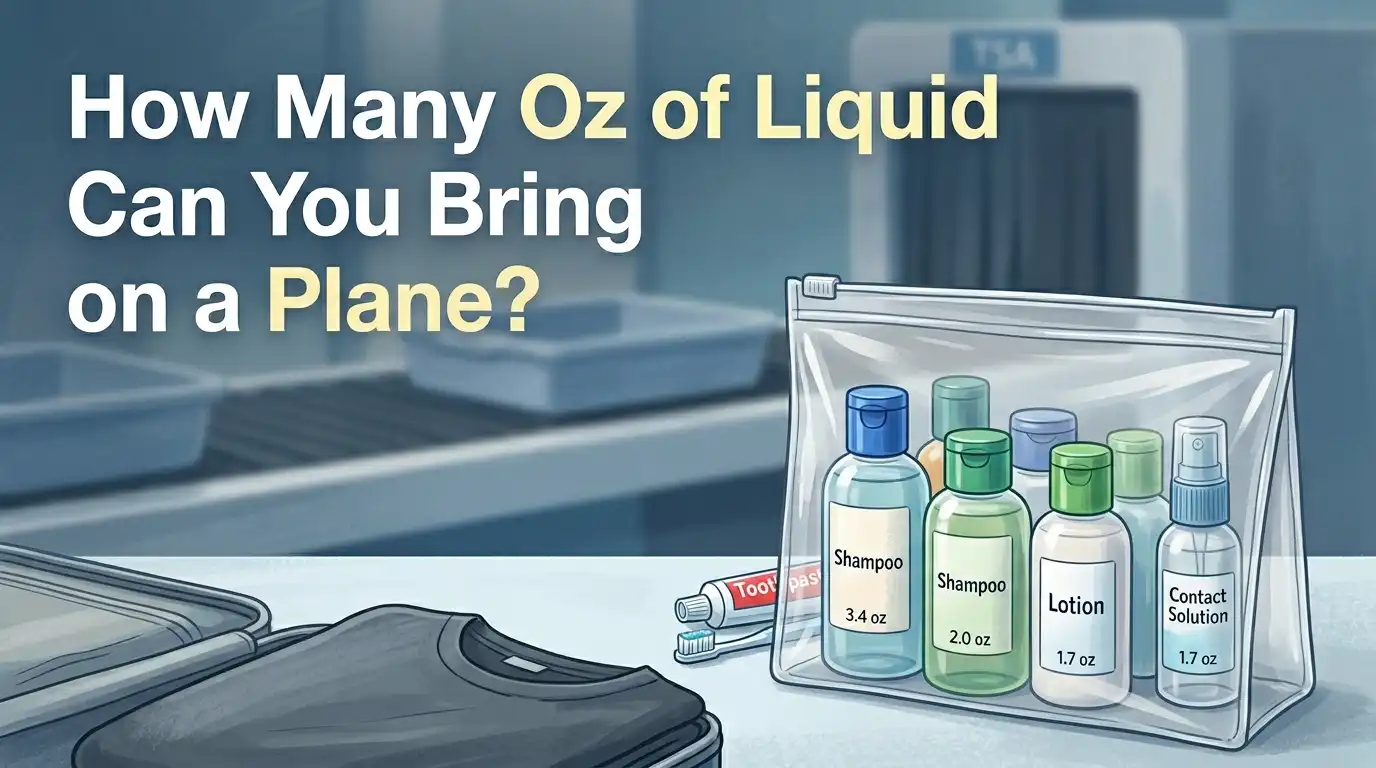
The TSA 3 1 1 rule is the standard for carrying liquids through airport security in the United States. The name breaks down into three simple parts. The “3” stands for 3.4 ounces, which is the maximum container size allowed. The first “1” means one quart sized, clear, resealable plastic bag. The second “1” means one bag per passenger.
This rule has been in place since 2006 and remains unchanged in 2026 for most U.S. airports. It applies to all liquids, gels, aerosols, creams, and pastes. Every item must be inside a container that is 3.4 oz or smaller, and every container must fit inside that single quart bag.
Pros: The rule is straightforward and consistent across all U.S. airports. You always know what to expect. Cons: The quart bag is small, so you cannot bring many products. You also need to purchase travel sized containers or transfer products before your trip.
How Many Ounces of Liquid Can You Carry On?
Each individual container in your carry on must hold 3.4 ounces (100 ml) or less. There is no overall ounce total that TSA counts. Instead, the limit is based on what fits in your single quart sized bag. A standard quart bag holds roughly 32 ounces of space, but in practice, you can usually fit about six to nine travel sized containers depending on their shape.
Here is a crucial detail many travelers miss: the container size matters, not the amount of liquid inside. If you have a 6 oz bottle that is only half full, TSA will still reject it. The bottle itself exceeds 3.4 oz, so it cannot go through the checkpoint regardless of how much product is left inside.
This means you should always transfer liquids into properly sized travel containers before you head to the airport. Do not assume a half empty large bottle will pass.
What Counts as a Liquid Under TSA Rules?
TSA defines liquids broadly. Anything that can pour, spread, spray, pump, or smear falls under the liquid rule. This includes obvious items like water, juice, and shampoo. But it also covers many items that travelers do not expect.
Toothpaste, lip gloss, and mascara all count as liquids. So do creamy foods like peanut butter, hummus, yogurt, and jelly. Aerosol products like hairspray and spray deodorant are included too. Even gel shoe inserts fall under this category.
Pros of knowing this: You can plan ahead and avoid losing items at security. Cons: Many daily essentials that feel solid or semi solid still require that limited quart bag space. A good tip is to switch to solid alternatives like bar soap, solid deodorant, and powder based products to save space in your liquids bag.
Liquid Rules for Checked Baggage
If you pack liquids in your checked luggage, the 3.4 oz rule does not apply. You can bring full sized bottles of shampoo, conditioner, sunscreen, and other personal care items. There is no general ounce limit for liquids in checked bags on domestic U.S. flights.
However, there are specific restrictions for certain categories. Alcoholic beverages between 24% and 70% alcohol by volume (ABV) are limited to 5 liters (169 oz) per passenger in checked bags. Alcohol above 70% ABV is completely prohibited. Flammable aerosols that are not personal care items are also banned from checked luggage.
Pros: Checked bags give you freedom to bring large containers of any personal care product. Cons: Checked bags cost money on many airlines, and liquids can leak during transit. Always double bag your liquids and place them in a sealed plastic bag to prevent spills from ruining your clothes.
Exceptions to the 3.4 Oz Rule
Not all liquids have to follow the 3 1 1 rule. The TSA grants specific exceptions for items considered medically necessary or essential for infant care.
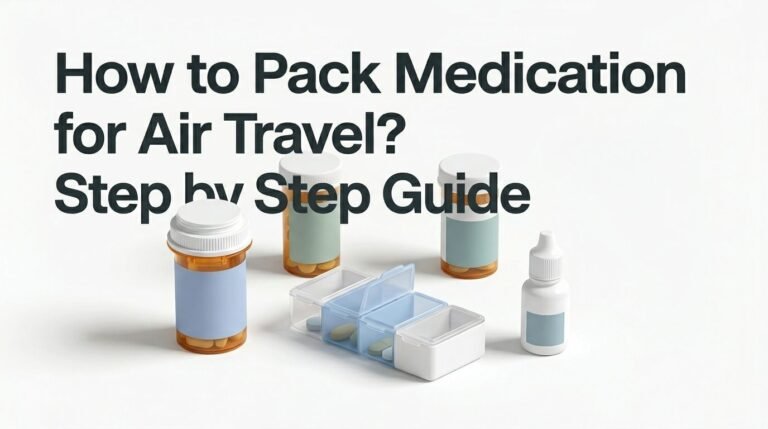
Prescription medications in liquid form can exceed 3.4 oz in your carry on. You should separate them from your quart bag and declare them to the TSA officer at the checkpoint. It helps to carry them in original pharmacy labeled containers, but this is not strictly required.
Breast milk, baby formula, and toddler drinks are also exempt. Parents and caregivers can bring these liquids in reasonable quantities that exceed 3.4 oz. Ice packs and cooling accessories used to keep these items cold are allowed too. A law passed in late 2025 also strengthened protections for how TSA agents handle breast milk and formula during screening.
Pros: These exceptions ensure health and safety needs are met. Cons: Exempt items will receive additional screening, which can add a few minutes to your security wait time.
How Duty Free Liquids Work on Flights
Duty free purchases add another layer to the liquid question. If you buy perfume, alcohol, or other liquids at a duty free shop inside an international airport, you can carry containers larger than 3.4 oz on the plane. The items must stay inside a sealed, tamper evident bag (commonly called a STEB) with a visible receipt.
Here is the catch: if you have a connecting flight in the United States where you must re clear TSA security, those duty free items may be confiscated if they exceed 3.4 oz. TSA allows duty free liquids purchased internationally and placed in STEBs, but the bags must remain sealed and the receipt must be visible.
Pros: You can bring home larger bottles of perfume or spirits from international trips. Cons: The rules get complicated during connections, and many travelers lose their purchases at the second security checkpoint. Plan your connections carefully if you shop duty free.
How New CT Scanners Are Changing the Rules
Airport security technology is evolving fast. New computed tomography (CT) scanners produce detailed 3D images of carry on bags, allowing security staff to see contents much more clearly than older X ray machines.
In the United States, airports equipped with CT scanners often allow passengers to keep their liquids bag inside their carry on during screening. You do not need to pull it out separately. However, the 3.4 oz container limit still applies at every U.S. airport in 2026.
The UK has gone further. As of early 2026, airports including Heathrow, Gatwick, Edinburgh, Belfast International, and Bristol have scrapped the 100ml limit entirely after completing CT scanner upgrades. Passengers at these airports can now carry liquids up to 2 liters per container in their cabin bags.
Pros: CT scanners save time and reduce hassle at security. Cons: The rules vary by airport, so you must check your specific departure airport before packing.
Liquid Rules for International Flights
If you are flying outside the United States, the liquid rules are similar but not identical. Most countries follow the International Civil Aviation Organization (ICAO) standard, which matches the 100 ml per container limit. The European Union, Canada, Australia, Japan, and many other countries enforce this same guideline.
Each country may use a slightly different bag size requirement. The EU, for example, specifies a resealable plastic bag of no more than 1 liter. This is very close to the U.S. quart sized bag.
However, as mentioned above, some UK airports have removed the 100ml limit thanks to CT scanner technology. This change does not apply across all of Europe yet. If you are flying from an EU airport that has not upgraded its scanners, the 100ml rule still stands.
Pros: The international rules are largely consistent, so you can use the same packing strategy worldwide. Cons: Exceptions and scanner upgrades vary by airport, and rules can change quickly, so always check before you fly.
Smart Packing Tips to Maximize Your Liquids Bag
Getting the most out of your quart sized bag takes a little planning. Here are practical steps you can follow.
Use silicone travel bottles that are flexible. They squeeze into gaps in the bag more easily than rigid containers. Fill each bottle to the 3.4 oz mark and no more, so you leave room for other items.
Switch to solid products wherever possible. Solid shampoo bars, deodorant sticks, and bar soap do not count as liquids. This frees up valuable bag space for items that only come in liquid form, like contact lens solution or sunscreen.
Buy basics at your destination. Hotels and vacation rentals often provide shampoo and soap. Buying a small bottle of sunscreen or toothpaste after you land can save you from cramming your quart bag full.
Pros: These strategies let you carry everything you need without sacrificing key products. Cons: Solid product alternatives can be more expensive or harder to find, and buying items at your destination adds cost.
Common Mistakes That Get Liquids Confiscated
Thousands of travelers lose items at security checkpoints every day. Most of these losses are preventable. The most common mistake is carrying a container that is larger than 3.4 oz, even if it is mostly empty. TSA judges the container size, not the fill level.
Another frequent error is forgetting that food items count as liquids. Travelers try to bring yogurt, soup, large water bottles, or jars of jam through security and lose them. If you want to bring these foods, eat them before the checkpoint or pack them in checked luggage.
Some people also forget to remove their quart bag from their carry on before placing it on the belt. At airports without CT scanners, this can trigger a bag search that slows you down. Always pull out your liquids bag and place it in a separate bin unless signage at your checkpoint says otherwise.
How to Travel with Medications and Special Liquids
Traveling with liquid medications requires extra awareness but is fully allowed. Prescription liquids in any amount can go in your carry on. You should inform the TSA officer before screening begins so they can process your items correctly.
Over the counter liquid medications like cough syrup are also allowed in quantities exceeding 3.4 oz, though TSA may perform additional inspection. Carrying a doctor’s note is not required, but it can speed up the process if questions arise.
Contact lens solution is sometimes listed as a medical liquid, but TSA generally treats it under the standard 3 1 1 rule unless you have a documented medical need for a larger supply. If you need more than 3.4 oz, carry documentation from your eye doctor.
Pros: TSA is accommodating for medical needs, and most prescription liquids clear security without issues. Cons: Expect extra screening time, and always arrive at the airport early if you carry multiple medical liquids.
What Happens if TSA Finds Oversized Liquids?
If a TSA officer finds a liquid container that exceeds 3.4 oz in your carry on, you have a few options. The officer will pull your bag for additional inspection and show you the item in question.
You can go back and place the item in your checked bag if you have time and your checked bag has not been processed yet. You can also give the item to a non traveling companion who has not yet passed security. If neither option works, the item will be discarded in the checkpoint bin.
TSA officers will not fine you or penalize you for accidentally carrying an oversized liquid. The consequence is simply losing the product. However, repeated violations or attempts to hide liquids could result in additional scrutiny during future screenings.
Quick Reference Chart for Liquid Limits
Understanding the numbers at a glance makes packing much easier. For carry on bags in the U.S., each container must be 3.4 oz (100 ml) or less. All containers must fit in one quart sized (approximately 946 ml) clear bag. You get one bag per person.
For checked bags, there is no general liquid size limit. You can pack full sized bottles. Alcohol between 24% and 70% ABV is capped at 5 liters total per passenger. Alcohol above 70% ABV is prohibited entirely.
For UK airports with CT scanners, the new limit allows containers up to 2 liters in cabin baggage. For all other international destinations, the standard is 100 ml per container in a 1 liter clear bag. These numbers can change as more airports adopt new technology, so always verify the rules for your departure airport a few days before your trip.
Frequently Asked Questions
Can I bring a water bottle through TSA security?
You can bring an empty water bottle through TSA security without any issues. Once you pass the checkpoint, you can fill it at a water fountain or bottle filling station inside the terminal. A full water bottle exceeding 3.4 oz will be confiscated at the checkpoint. Many airports now have free filtered water stations near the gates.
Does the 3 1 1 rule apply to domestic and international flights?
Yes. In the United States, the 3 1 1 rule applies to both domestic and international flights departing from U.S. airports. Most international airports follow a nearly identical 100 ml rule set by ICAO. The key difference is that some UK airports have removed the 100 ml limit after installing CT scanners.
Can I bring multiple quart bags of liquids?
No. TSA allows one quart sized bag per passenger. All your travel sized liquid containers must fit inside that single bag. If you need more liquids than one bag can hold, pack the extras in your checked luggage.
Are solid deodorant and lip balm considered liquids?
Solid stick deodorant is not considered a liquid and does not need to go in your quart bag. Gel or spray deodorant, however, does count as a liquid. Standard twist up lip balm is generally treated as a solid. Liquid lip gloss or lip oil must go in the liquids bag.
What if my medication bottle is larger than 3.4 oz?
Liquid medications are exempt from the 3 1 1 rule. You can carry prescription and medically necessary liquid medications in containers larger than 3.4 oz. Declare these items to the TSA officer before screening. They will be inspected separately but are allowed through the checkpoint.
Can I bring food through airport security?
Solid foods like sandwiches, granola bars, and whole fruit are allowed through security. Liquid or semi liquid foods like soup, yogurt, peanut butter, and jam must follow the 3.4 oz container rule if carried in your carry on bag. Pack larger quantities of these foods in your checked luggage instead.
Hi, I’m Marie Bennett, the founder of PackSmart.blog.
I write about travel essentials and Amazon gear reviews to help you pack smarter and travel lighter.
From must-have accessories to space-saving gadgets, I test and share what truly works on the road.
My mission is to make every trip stress-free and organized for travelers like you.
Join me as I explore smarter ways to travel—one bag at a time.