Pelican ATX 22 Carry-On Case Review: Rugged Hard-Shell Luggage Tested
Do you want a carry on case that survives every trip? The Pelican ATX 22 aims to do exactly that.
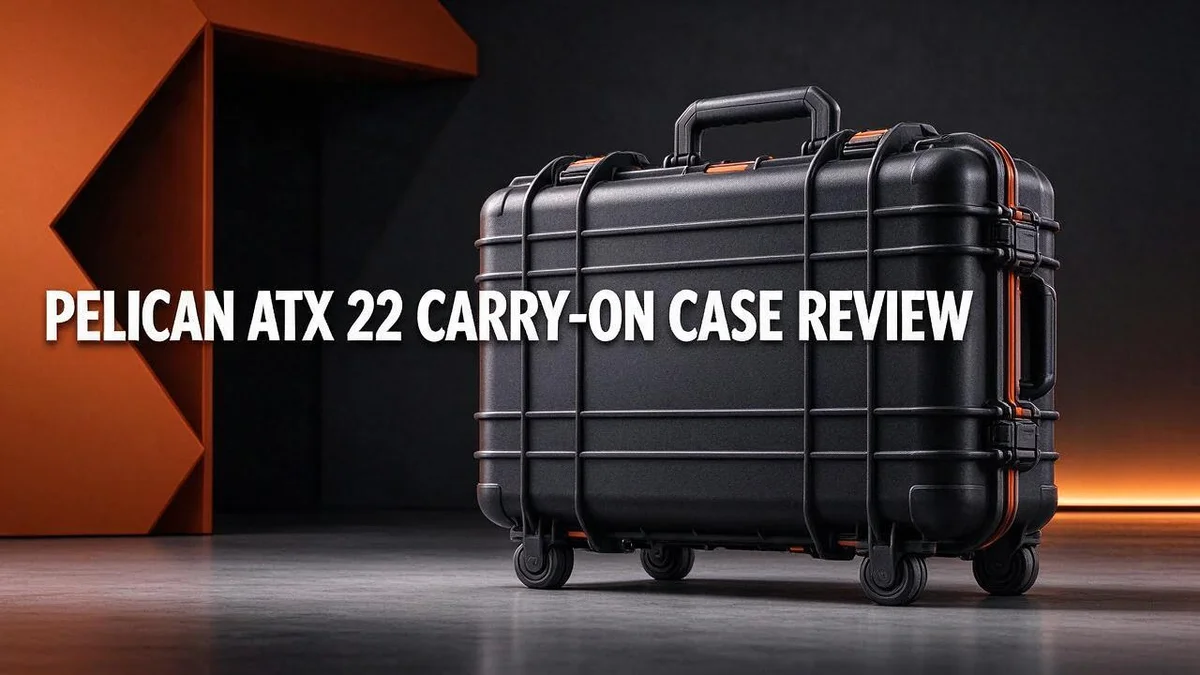
This hard case measures 22″ x 14″ x 9.1″ outside and holds 30 liters inside. It uses a proprietary polypropylene blend and is listed as waterproof.
Soft close handles fold flush and sit behind body reinforcements. One reviewer says it even fits cowboy boots, which most carry ons cannot handle.
A user also reports that it works with Ryanair and EasyJet. In this review, we look at the build, the space, and the trade offs so you can decide if it suits your travel style.
In a Nutshell
-
Tough build: The case uses a proprietary polypropylene blend that Pelican lists as waterproof. Body reinforcements add extra protection around the edges.
-
Weight: It weighs 14.3 lb (6.49 kg) according to Pelican. That is heavier than most soft bags, so check your airline’s weight limit before you fly.
-
Packing power: The interior measures 18.6″ x 11.78″ x 7.24″. One reviewer fits cowboy boots inside, and he says most carry on bags cannot do that.
-
Durability: The same reviewer says the case holds up well over time. That makes it a good match for rough baggage handling and busy airports.
-
Drawback: One reviewer wishes the case came in aluminum. That is a small gripe, but it shows some buyers want an even tougher shell.
-
Best for: Frequent travelers who want a rugged hard case will enjoy it most. Casual flyers may prefer a lighter option, such as the Pelican Air series.
Build Quality and Materials

Last update on 2026-10-25 / Affiliate links / Images from Amazon Product Advertising API Some of the links on this website are affiliate links, which means that at no additional cost to you, I earn a commission if you click through and make a purchase. I only recommend products and services that I believe will add value to my readers. Thank you for your support!
Build quality starts with the outer shell. A hard case must survive rough handling at airports. Strong materials matter most when baggage crews toss bags onto belts.
The shell uses plastic rather than metal. Plastic can flex a little under pressure. That flex helps the case absorb a knock from a cart or wall instead of denting.
Corners take most of the impact during travel. Solid corner reinforcement keeps the frame square over many trips. Check the corners first when you inspect any hard case.
Latches deserve a close look too. Hard cases often rely on latches instead of zippers to stay sealed. Latches should click shut firmly and sit flat against the lid.
Seals and gaskets matter for water and dust. A worn seal can let moisture slip inside. Check the seal along the lid edge every few trips.
Handles and wheels also face constant stress. Their mounting points take the weight when the case rolls. Look at those spots for loose screws or small cracks.
Scratches appear on hard shells after years of use. Light scuffs rarely affect how the case works. Deep cracks or split plastic are the real warning signs.
Finish also affects daily wear. Matte surfaces hide scuffs better than glossy ones. Many owners prefer a matte look for this reason.
Cleaning is easy with a damp cloth. Mild soap removes dirt from most hard shells. Avoid harsh solvents that can dull the surface.
Overall, the materials suit people who want a case built to last. Regular checks keep the shell in good shape. A quick wipe after each trip stops grime from building up.
Size, Capacity and Airline Compatibility
Always check your airline before you pack. Airlines set strict rules for carry on bags, and size limits matter more than most travelers expect.
Measure the case with handles and wheels included. Many carriers count these parts in the total size. A case that looks small on a shop shelf may still fail a gate check.
Think about the overhead bin too. Bins on smaller planes can be shallower than they look. A hard shell leaves no room to squeeze, so the fit must work from the start.
The interior room feels generous for its outside size. Reviewers say it fits cowboy boots, which many carry on cases cannot handle. That detail helps people who pack bulky footwear.
Roll soft clothes tightly to save space. Packing cubes keep layers flat and organized. Place heavy items near the wheels so the case stands upright.
Personal item rules differ from carry on rules. Some airlines allow only a small bag under the seat. If you plan to use this case as a second bag, check the size limits carefully.
Weigh the case once it is packed. Some airlines check weight at the gate. A full hard shell can reach the limit quickly. Pack a small luggage scale to avoid surprises.
A rolling case also needs room to turn in tight aisles. Measure your path before you board. Smooth wheels glide better on airport floors.
Gate agents sometimes use a sizer frame. If the case fits snugly, it usually passes. Keep a little space for extra items you buy on the trip.
Rules change often, so check the airline website before each flight. Policies can also shift by route. A quick check saves time at the airport.
Handles, Latches and Ease of Carrying
Handles matter more than most shoppers expect. A sturdy shell means little if the grip feels awkward.
Ease of carrying depends on how the handle feels during a long walk.
You will lift the case many times on one trip. A comfortable top handle keeps your wrist relaxed.
Try lifting the packed case from a low surface. Notice whether your fingers ache after thirty seconds.
Rolling makes the biggest difference for most travelers.
Test the pull handle at full height before you commit.
Walk across a smooth floor and then a rough sidewalk. Watch if the case wobbles or tips.
Latches need attention too, but for a different reason.
Good latches keep the lid shut when the case tumbles off a cart.
Press each latch with your thumb and listen for a firm click.
Loose latches rattle and can pop open under pressure.
Latch placement also affects daily use.
Try opening and closing the case with one hand.
If the motion feels awkward in a crowded terminal, it will annoy you quickly.
Balance matters as much as the handle itself.
Pack heavier items near the wheels so the case stays upright.
A balanced load makes turning in tight aisles much easier.
Stairs and curbs present a different challenge.
Many travelers end up lifting the case instead of rolling it.
Practice a short lift with the packed bag at home.
Comfort on short lifts often decides whether the case feels easy.
Finally, a good test includes a short walk.
Roll the case across a parking lot for five minutes.
Notice how your hand, shoulder, and back feel afterward.
Simple habits like this reveal more than any product sheet can.
Top 3 Alternatives
Samsonite Freeform


Last update on 2026-10-14 / Affiliate links / Images from Amazon Product Advertising API Some of the links on this website are affiliate links, which means that at no additional cost to you, I earn a commission if you click through and make a purchase. I only recommend products and services that I believe will add value to my readers. Thank you for your support!
Samsonite Freeform is a great pick for frequent flyers who want less weight. Its hardshell handles bumps well and resists scratches. The four spinner wheels roll smoothly through busy terminals.
Packing is simple with the wide main compartment. A removable divider keeps shoes and toiletries separate. The handle feels comfortable, even on long walks to the gate.
Monos Carry-On Pro

Last update on 2026-10-25 / Affiliate links / Images from Amazon Product Advertising API Some of the links on this website are affiliate links, which means that at no additional cost to you, I earn a commission if you click through and make a purchase. I only recommend products and services that I believe will add value to my readers. Thank you for your support!
Monos Carry-On Pro has a sleek look that stands out in any crowd. Its hard shell protects clothes and electronics from rough handling. The compact size fits neatly into most overhead bins.
Many travelers love the built-in charging port. Its zipper pockets help you find small items fast. The smooth wheels make turns easy in tight aisles and crowded lobbies. It also holds up well on rainy days.
Travelpro Maxlite 5

Last update on 2026-10-27 / Affiliate links / Images from Amazon Product Advertising API Some of the links on this website are affiliate links, which means that at no additional cost to you, I earn a commission if you click through and make a purchase. I only recommend products and services that I believe will add value to my readers. Thank you for your support!
Travelpro Maxlite 5 is one of the lightest options in its class. Its softside shell flexes a little, so it squeezes into tight spaces. An expansion zipper adds extra room for souvenirs on the way home.
Four spinner wheels help the bag move with less effort. The front pocket keeps chargers and documents within easy reach. It works well for weekend getaways and longer business trips alike.
Weight and Portability
The Pelican ATX 22 weighs about 14.3 pounds according to Pelican. Another retailer lists it at 12.8 pounds. That gap is small, but it can matter on a tight trip.
Empty weight is only part of the story. Every item you add raises the total fast. A pair of shoes, a laptop, and a toiletry bag can push you past your limit before you notice.
Start with the base weight. The case itself uses up part of your allowance before you add a single shirt. Knowing that number helps you plan your packing list from the start.
Smart travelers move weight off the case. Wear your heaviest boots on the plane. Put your bulky jacket on as well. Your body carries those items for you, so they do not count toward the bag’s total.
Dense items belong near the wheels. Keep heavy objects low and centered. This keeps the case steady when you pull it. It also helps you avoid sudden tipping on a curb or a bumpy platform.
Practice a full trip at home before you fly. Pack the case, add your shoes and jacket, then roll it around the house for ten minutes. You will learn quickly whether the load feels fair.
Leave some room for souvenirs. A little spare space gives you flexibility on the way home. You can avoid stress at the check in counter and keep your bag within the limit.
Weather Resistance and Protection
Rain and wet pavement are common travel problems. A soaked jacket or damp electronics can ruin a trip fast. Pelican lists the ATX 22 as waterproof, so it is built to handle wet conditions.
The shell uses a polypropylene blend that helps keep moisture outside. Many travelers load gear into a trunk during a storm. Lift the case out quickly and avoid leaving it in a puddle on the driveway.
Waterproof does not mean invincible. Check the lid edge and closure area after each trip. Wipe away grit so the closure seals cleanly.
Sun and heat matter too. A case left on hot pavement or in a parked car can warm up quickly. Extreme heat can stress any plastic shell over time, so keep it shaded when you can.
Cold weather brings its own challenges. Slush and wet snow can soak into the wheels and base, so dry them fast.
Wheels and base take the most splash. They sit closest to wet ground and collect puddle water. Wipe them dry after walking through puddles, then let them air out before packing.
Protection from bumps is another layer. Body reinforcements help guard the handles when the case knocks against walls or curbs.
Airport floors can get slick near entrances during bad weather. Keep the case upright and away from wet floors while you wait in line.
Pack your contents with weather in mind. Place electronics and documents in zip bags. Add silica gel packs for extra moisture control.
If you expect heavy storms, a separate rain cover adds one more shield.
The ATX 22 handles everyday weather well. Simple habits like drying, wiping, and smart packing keep it protected for many trips.
Value for Money
Think about how often you will use the case. A case that flies once a year asks different questions than one that travels every month.
Frequent travelers usually get the most from a sturdy shell like this. Occasional flyers should weigh their trips first.
Long life changes the math. A rugged shell can stay in service for many years when you treat it well. Fewer replacements mean fewer trips to the store and less waste over time.
Look at what you gain beyond the shell. Reviewers say it fits cowboy boots, a feat many carry on bags cannot match. That detail matters if you pack bulky footwear for work, riding, or a trip to a ranch.
Airline rules also shape your decision. Users report that the case works with Ryanair and EasyJet size limits. Checking those rules before you travel saves stress at the gate.
Some shoppers wish for an aluminum build instead. That preference shows how people weigh looks, feel, and strength. Polypropylene keeps the weight moderate and helps block moisture, which suits most trips.
Compare it with other Pelican style cases too. Brands like Apache, Plano, and DeWalt offer similar options. Ask whether you need the Pelican name or simply a sturdy case that does the job.
Think about your daily routine. A case that fits your habits will earn its place in your closet. If you travel rarely, a simpler option may serve you well. If you travel often, durability and fit usually win out.
The best choice depends on your needs. Match the features to your trips, and you will know whether this case fits your life. Good value means the bag keeps working for you for years.
Pros and Cons
Pros
- Soft-close handles fold flush against the body.
- Users report it fits Ryanair and EasyJet carry-on rules.
- Reviewers say it holds up well over time.
- Its 30 liter space suits short trips.
- The rugged build feels ready for rough travel days.
Cons
- Fewer direct rivals make side-by-side shopping harder.
- Sellers list different weights, so compare specs carefully.
- Some travelers may find it more case than they need.
- Check current airline size limits before you travel.
Who Should Buy It
This case suits people who travel for work every week. Frequent trips wear down cheap bags fast. A sturdy shell gives you one piece of gear you can count on.
Photographers and videographers often carry expensive gear on the road. A hard shell can protect lenses, drones, and tools from knocks. The case keeps your work safe from start to finish.
Field technicians and crews also benefit. They move kits between job sites and vehicles every day. A case that handles rough treatment can keep up with the pace.
Adventure travelers might enjoy it too. Hikers, climbers, and sailors often pack gear they cannot replace on the road. This case gives them a durable home for their kit.
Think about how you pack. If you like to bring many items, the interior space gives room to organize. Shoppers who pack light may prefer a softer bag instead.
People with back or shoulder concerns should test the weight first. A full case adds bulk before you pack a single shirt. Lifting it in a store can help you decide.
Fans of organized packing will also like the structure. Clear layouts help you find items quickly at security checks. Quick access saves time in busy terminals.
Gift buyers should know the recipient matters. Someone who values gear quality will appreciate the tough build. A person who wants a quiet, lightweight bag may feel differently.
Bottom line: if you want a case that feels built for hard use, this one fits the bill. If you travel rarely or pack light, you may want to look elsewhere. Your travel habits should guide the choice.
Final Verdict
The Pelican ATX 22 is a strong pick for travelers who put protection first. It shields your belongings from rain, bumps, and rough handling. That peace of mind is its biggest strength.
Our verdict: recommended, with a few clear conditions. The case does what it promises. It keeps your things safe when travel gets messy.
Waterproof protection matters more than most people expect. A sudden downpour on the tarmac will not worry you. A leaking bottle inside your bag will stay inside the shell.
The case does have limits. It looks more like a utility tool than a fashion piece. Some shoppers will love that rugged style, and others will not.
Our research also relies on a small pool of reviewer and user reports. Treat their praise as a helpful guide, not a guarantee. Your own experience may differ a little.
Take three quick steps before you buy:
- Pack your usual trip load and check that it fits.
- Read your airline’s cabin bag page.
- Confirm the seller’s return policy.
These steps take ten minutes. They protect you from surprises at the gate.
Some buyers may prefer a lighter option. The Pelican Air series is worth a look for them. It shares the Pelican name, but it follows a different build approach.
Final thought: the ATX 22 earns a confident yes from us for readers who want a tough, dependable cabin case. If that sounds like you, you will likely enjoy it for many trips. If you want a soft, light, casual bag, look elsewhere.
Frequently Asked Questions
Is this case a good fit for first time travelers?
It can work well for new flyers. A hard shell protects fragile items during early trips. A lighter soft bag may feel easier to lift, though.
Can I use this case as checked luggage?
The research focuses on cabin bag use, so it does not confirm checked luggage rules. Always check your airline’s baggage page before you pay for checked bags.
How should I pack it for a long trip?
Pack heavy items low and near the center. This keeps the case steady when you lift it. Roll soft clothes to fill gaps. Extra clothing can push the case over airline limits, so weigh it before you leave.
How do I keep the case in good shape?
Wipe the shell after each trip. Store it in a dry place to prevent odors. Check the seals and closures often so you spot wear early.
Does it suit people who fly only once a year?
Yes, it can. The sturdy build helps protect gear on rare trips. Still, infrequent travelers may find the case more than they need. Think about how often you fly before you decide.

Hi, I’m Marie Bennett, the founder of PackSmart.blog.
I write about travel essentials and Amazon gear reviews to help you pack smarter and travel lighter.
From must-have accessories to space-saving gadgets, I test and share what truly works on the road.
My mission is to make every trip stress-free and organized for travelers like you.
Join me as I explore smarter ways to travel—one bag at a time.