
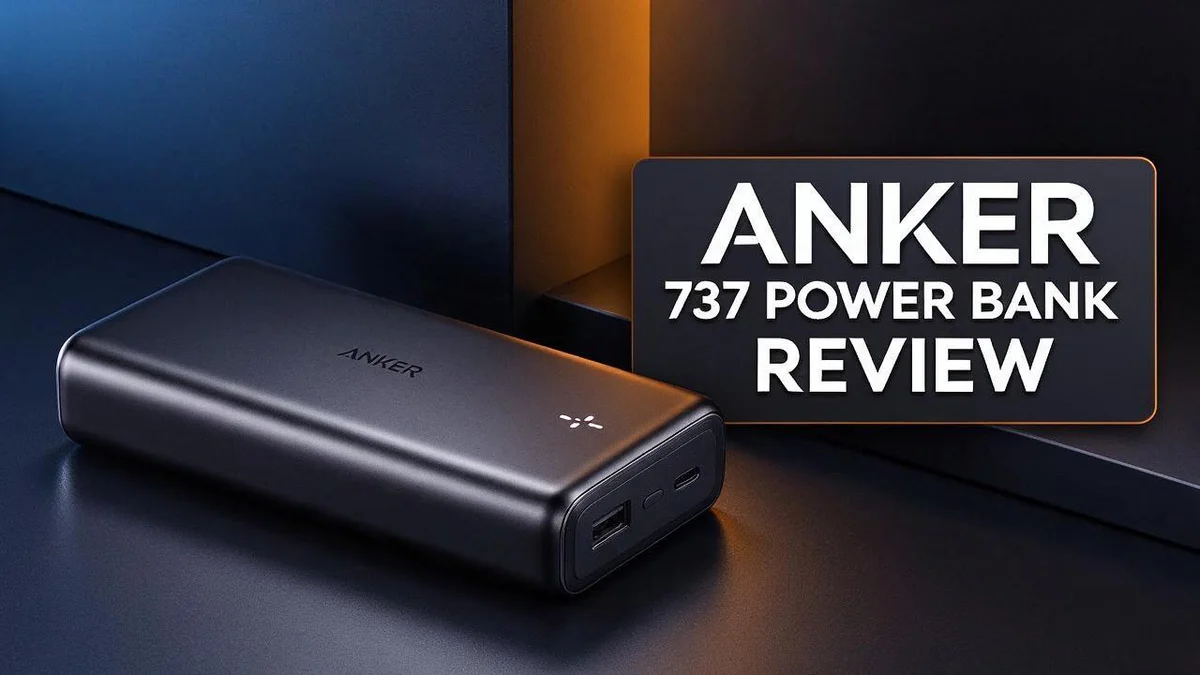
Anker 737 Power Bank Review: 24,000mAh, 140W Laptop Charging Tested
Your phone dies at the airport. Your laptop hits 5% in a café. The Anker 737 Power Bank aims to fix both problems.
This 24,000mAh power bank delivers up to 140W with PD 3.1. It has two USB-C ports and one USB-A port. It can charge a real laptop, not just a phone.
It also recharges fast. Expect a full refill in about one hour at 140W. TurboBoost, app control, and a smart display give you extra control.
In this review, we test its speed, ports, and travel use. We also compare it with rivals like the EcoFlow Rapid Pro and the Belkin BoostCharge Pro Magnetic. Let’s see if it earns a place in your bag.
In a Nutshell
-
Laptop ready: This power bank charges real laptops, not just phones and tablets. You can leave the wall charger at home.
-
Three ports: It offers two USB-C ports and one USB-A port. You can charge a laptop and a phone at the same time.
-
Smart extras: The smart display shows live power info. The app control and TurboBoost features give you more say over how it charges.
-
Two way charging: The same USB-C port can power your devices and refill the bank. Recharging takes about 1 hour at 140W and about 1.43 hours at 100W.
-
Things to watch: You need a good cable to reach top speeds. Check your airline rules before you fly, because capacity limits can apply.
-
Rivals to know: The EcoFlow Rapid Pro has a retractable cable and a faster recharge. One reviewer rates its real world performance above Anker’s 300W model. The Anker Nano, Belkin BoostCharge Pro Magnetic, Elecom Nestout Rugged, and UGreen also compete.
Key Features and Specs

Last update on 2026-11-11 / Affiliate links / Images from Amazon Product Advertising API Some of the links on this website are affiliate links, which means that at no additional cost to you, I earn a commission if you click through and make a purchase. I only recommend products and services that I believe will add value to my readers. Thank you for your support!
Let’s look at what this bank does on a normal day. The TurboBoost feature helps busy users most. It pushes extra power to your device when the battery runs low.
The App Control option adds real flexibility. You can monitor settings from your phone. Planning ahead becomes much easier before a long trip.
Capacity matters more than the numbers suggest. A 24,000mAh bank can refill a typical phone several times over. That means fewer hunts for a wall outlet in busy airports.
Recharge timing also fits a busy schedule. Refilling the bank takes about one hour at 140W. At 100W, it stretches to roughly 1.43 hours, so a lunch break is often enough.
Who benefits most from these features? Frequent flyers, remote workers, and road trip fans will notice the difference. They often need steady power far from home.
Think about how many devices you charge at once. A bank with several ports suits people who carry a phone, tablet, and earbuds together. Choose the setup that matches your daily habits.
Airline rules deserve a quick check before you pack. Many carriers limit how you can bring large batteries onboard. Keep the bank in your cabin bag to stay on the safe side.
Fans of magnetic accessories have other options. Belkin BoostCharge Pro Magnetic follows the Qi2 standard. You can also compare UGreen and Elecom Nestout Rugged models before you decide.
Design, Display and Portability
When you pick up this power bank, the body feels dense and well made. It sits flat on a table and does not wobble.
The shape suits a backpack pocket. It slides into a side pocket or laptop sleeve with ease. You can carry it all day without thinking about it.
The front panel looks clean and simple. Most of the space goes to the display. Fingerprints show up quickly, so a soft cloth keeps it looking fresh. Its clean lines also suit a work bag or a travel case.
Ports sit where your fingers reach. The connectors line up along one edge. You can plug in a cable while the bank rests on a seat tray.
The screen works in dim light. Readings stay clear on a plane or in a dark hotel room. You glance down and read the level in seconds.
Carrying it through the airport. Many travelers keep it in a jacket pocket during a long walk to the gate. A full bank feels heavier than an empty one, which is normal for a unit this size.
Storage tips. Keep it in a soft pouch with your cables. This keeps the surface clean and stops small items from scratching it.
At a desk, the bank stands upright on its side without slipping. It keeps your workspace tidy while it charges your devices nearby. Use it as a small charging hub when you work from a cafe.
Who benefits most from this layout? Road trip fans and remote workers will like having everything within reach. The bank fits beside a phone, earbuds, and a notebook without crowding them.
Charging Speed and Real-World Performance
Charging speed decides whether this bank saves your day. A quick top up can bring a dead phone back to life during a short gate wait.
Output gets shared when you plug in more than one device. Using both USB C ports at once may lower the power each one receives.
Laptops need the most power, so match them carefully. A higher wattage port gives a laptop the best chance at steady charging.
Heat is a quiet factor during fast charging. Warm devices may slow the flow of power to protect their batteries. Keep the bank out of direct sun for the best results.
Conversion losses mean the bank never delivers every watt. Some energy turns into heat as the bank moves power to your device. Expect the rated capacity to feel a bit smaller in daily use.
Real world results depend on your daily habits. Commuters who plug in during short breaks often benefit the most from quick sessions.
Check your phone model too. Some phones accept fast charging only up to a set wattage. The bank then matches that lower speed, which is normal and safe.
Recharging the bank takes longer when devices draw power at the same time. Plan a full refill overnight or when you sit at a desk. Short sessions during the day keep the bank ready for emergencies.
Testing on the go shows the true difference. Charge your phone during a walk or a meal, then check the screen. Small sessions reveal how the bank performs without any lab setup.
Pick the right moment to charge. Plug in your phone while you shower or eat, since short sessions add up fast. Steady small boosts often matter more than one long charge.
Top 3 Alternatives
Anker PowerCore 26800


Last update on 2026-11-11 / Affiliate links / Images from Amazon Product Advertising API Some of the links on this website are affiliate links, which means that at no additional cost to you, I earn a commission if you click through and make a purchase. I only recommend products and services that I believe will add value to my readers. Thank you for your support!
If you need serious battery capacity for long trips, the Anker PowerCore 26800 is a strong choice.
This portable charger holds enough charge to refill a phone several times over.
It also has a compact shape that slides easily into a backpack or tote.
Many people use it on flights, hikes, and busy workdays when outlets are hard to find.
Belkin BoostCharge Power Bank

Last update on 2026-11-11 / Affiliate links / Images from Amazon Product Advertising API Some of the links on this website are affiliate links, which means that at no additional cost to you, I earn a commission if you click through and make a purchase. I only recommend products and services that I believe will add value to my readers. Thank you for your support!
The Belkin BoostCharge Power Bank suits people who love a clean and simple design.
It works well for everyday use at the office, on the train, or during a commute.
Its sleek build feels good in the hand and takes up very little space.
Its simple controls make it easy to use right away. It is a practical pick for daily charging needs.
RAVPower 26800mAh Power Bank

Last update on 2026-11-11 / Affiliate links / Images from Amazon Product Advertising API Some of the links on this website are affiliate links, which means that at no additional cost to you, I earn a commission if you click through and make a purchase. I only recommend products and services that I believe will add value to my readers. Thank you for your support!
The RAVPower 26800mAh Power Bank gives you plenty of power for multiple devices at once.
It offers several charging ports, so you can top up a phone, tablet, and earbuds together.
Many travelers choose it for road trips, camping weekends, and long days away from home.
Each option offers a different balance of size, power, and style, so pick the one that fits your routine.
Recharge Time and Two-Way Charging
Two way charging changes how this bank fits into your day. The USB C ports handle power in and power out. That gives you more options on the road.
Input and output share the same path, so cable choice matters. A short cable with high wattage ratings helps the bank refill faster. Keep a spare cable for your phone.
The EcoFlow Rapid Pro lists about 300W for recharging. That is a strong number on paper. Still, most daily trips need far less speed than that.
Your wall charger matters just as much. A slow adapter stretches every refill, even when the bank accepts faster input. Pair it with a charger that matches your goals.
Run a quick test at home. Drain the bank, then time a full refill with your usual setup. Write the result down. You can use that number to plan packing for trips.
Short refills add up. Refill the bank during a lunch break or a long meeting. Short sessions add up over a week and keep the bank ready.
Cable quality affects safety too. Cheap cables can overheat or fail under heavy loads. Choose certified cables from a name you trust.
Compare speeds honestly. Spec sheets show best case numbers. Your own tests show what you actually get. Trust both, but trust your own timer most. The EcoFlow comparison still helps heavy users who need a fast turnaround. Anker still fits most everyday needs well. Choose what fits your routine best.
App Control and Smart Features
The app turns this bank into a smart tool. Anker pairs the 737 with App Control, so you can watch your power bank from your phone. Open the app to see what the bank is doing at any moment.
Many people forget to check battery levels before a trip. The app shows the remaining charge, which helps you plan. You can spot a low bank before your flight takes off.
Setup usually takes just a few minutes. Pair your phone, then follow the steps on your screen. Once connected, the bank stays ready for your next flight.
Smart features also help you learn your charging habits. Use the app to see how each port performs. That insight shows which port suits your phone or tablet best.
The smart display on the bank works with the app. It shows key numbers without any setup. Glance at it and know your status in seconds. Quick checks feel easy with this combo.
Firmware updates keep the features fresh. Check the app for updates now and then. New updates can add tools and improve control.
Privacy matters too. Only pair the bank with your own phone. Keep your app login secure, just like your other accounts.
Some smart features need a steady connection. Bluetooth range is limited, so keep your phone nearby when you check the bank. If the app cannot find the bank, move closer and try again.
Smart features make daily use easier. You stay in control without digging through your bag. Try the app once, and you may find it a helpful companion on every trip.
Travel and Airline Considerations
Flying with a power bank needs a little planning. Most airlines follow the same basic rules for lithium batteries. Check those rules before you pack your bag.
Watt hours matter more than milliamp hours. The Anker 737 has a 24,000mAh capacity. That works out to roughly 89 watt hours.
Many airlines allow this size in carry on bags without extra approval. Always confirm the rating on the label before you fly.
Keep the bank in your carry on bag. Airlines do not allow power banks in checked luggage. Loose batteries can short circuit in a cargo hold, so the cabin is always the safest place.
Plan your cabin charging too. Some seats have only one outlet, so your bank can power a phone and a tablet at the same time. Pack a short USB C cable so you can connect both devices without fuss.
Security checks can slow you down. Keep the bank within easy reach so you can show it to staff quickly. Some agents may ask you to take it out of your bag during screening.
Flight crews can ask you to stop charging. They may tell you to pause use during the flight. Follow their instructions right away, even if your phone is almost empty.
Some airports and airlines also set their own rules. Policies can change with new safety guidance. Check your airline website a few days before you travel. If you fly abroad, look up the local rules as well.
Pack the bank in your daily bag, not the suitcase. This small habit saves stress at check in. You will also avoid last minute surprises at the gate.
Pros and Cons
Pros
– Three ports let you charge several gadgets at the same time.
– The 140W output suits many modern laptops.
– TurboBoost gives your phone a quick top up when time is short.
– The smart display shows your remaining power at a glance.
– Its large capacity keeps a full day of devices running on the go.
Cons
– It feels bulkier than slim phone only banks.
– You need a device that accepts high wattage to see full speed.
– Rivals like the EcoFlow Rapid Pro offer a retractable cable.
– Older devices may not take advantage of the top output.
Who Should Buy It
Some people will get the most from this power bank. Frequent travelers who carry a laptop often find it useful. Many modern laptops need strong power to stay charged, and this bank can handle them.
Remote workers and students also benefit. Long days at a café or library can drain a laptop fast. This bank keeps work going without a hunt for an outlet.
Content creators who shoot outdoors may like it too. Cameras, phones, and lights all need power in the field. One large pack means fewer chargers to manage, and field work can last all day.
Families make another good match. Parents can keep tablets and phones alive on road trips. Kids often ask for a charge at the worst moment, so a full bank helps.
Campers and road trippers should consider it as well. A cooler or small device can run longer with this capacity. Checking the app each morning helps plan the day.
Gamers who play on handheld consoles may also find it helpful. A full charge can carry a long session away from home. Pair it with a cable that matches the console.
Some buyers should look elsewhere, though. If you only charge your phone once in a while, a slim bank fits better. Commuters with short trips rarely use all that capacity. People who want a pocket sized bank should pass on this model. Their bag stays light and simple with a smaller option.
Think about your own habits before you decide. List the devices you charge most often. Then pick the bank that matches that list.
Final Verdict
The Anker 737 Power Bank earns a strong recommendation from me. It balances power, speed, and portability better than most rivals in its class.
The standout feature is its recharge speed. The bank refills in about one hour at 140W. That cuts the wait time before your next trip.
It also works as a true laptop charger. Many power banks only help phones, but this one keeps real work machines alive. That makes it a useful daily tool.
The two way charging makes life simpler. You can use one cable setup to fill the bank and power your devices. You pack less gear and carry fewer bricks.
Some rivals do certain things better. The EcoFlow Rapid Pro has a built in retractable cable and fast recharging. One reviewer even rates its real world performance above Anker’s 300W model.
Other options fit different needs:
- Anker Nano Power Bank suits people who want a smaller size.
- Belkin BoostCharge Pro Magnetic adds Qi2 wireless charging.
- Elecom Nestout Rugged handles rough outdoor use.
- UGreen offers another solid choice to compare.
Still, the Anker 737 gives you the most complete package in one body. It handles phones, tablets, and laptops with ease. It also connects with a helpful app.
My advice is simple. Choose the Anker 737 if you want one power bank that does almost everything well. Pick a rival only if you need a specific feature, such as magnetic charging or extra durability.
Final score: a confident yes. The Anker 737 earns its place in your bag.
Frequently Asked Questions
What cable works best with this power bank?
A strong cable makes a big difference. Choose a USB C cable rated for high wattage. A thin or worn cable can slow charging, even when the bank can deliver 140W.
Is the Anker 737 the same as the PowerCore 24K?
Yes, the two names refer to the same bank. It holds 24,000mAh of power. The name you see on the box may vary, but the model is the same.
How does charging speed change with a lower wattage charger?
Lower wattage means a longer wait. At 100W, the bank takes about 1.43 hours to refill. That is a little longer than the roughly one hour needed at 140W.
What should I bring for charging on the road?
Pack a high wattage USB C charger and a sturdy cable. This setup lets you refill the bank quickly at a hotel, cafe, or car. It also helps you get the most from the bank during long trips.

Hi, I’m Marie Bennett, the founder of PackSmart.blog.
I write about travel essentials and Amazon gear reviews to help you pack smarter and travel lighter.
From must-have accessories to space-saving gadgets, I test and share what truly works on the road.
My mission is to make every trip stress-free and organized for travelers like you.
Join me as I explore smarter ways to travel—one bag at a time.