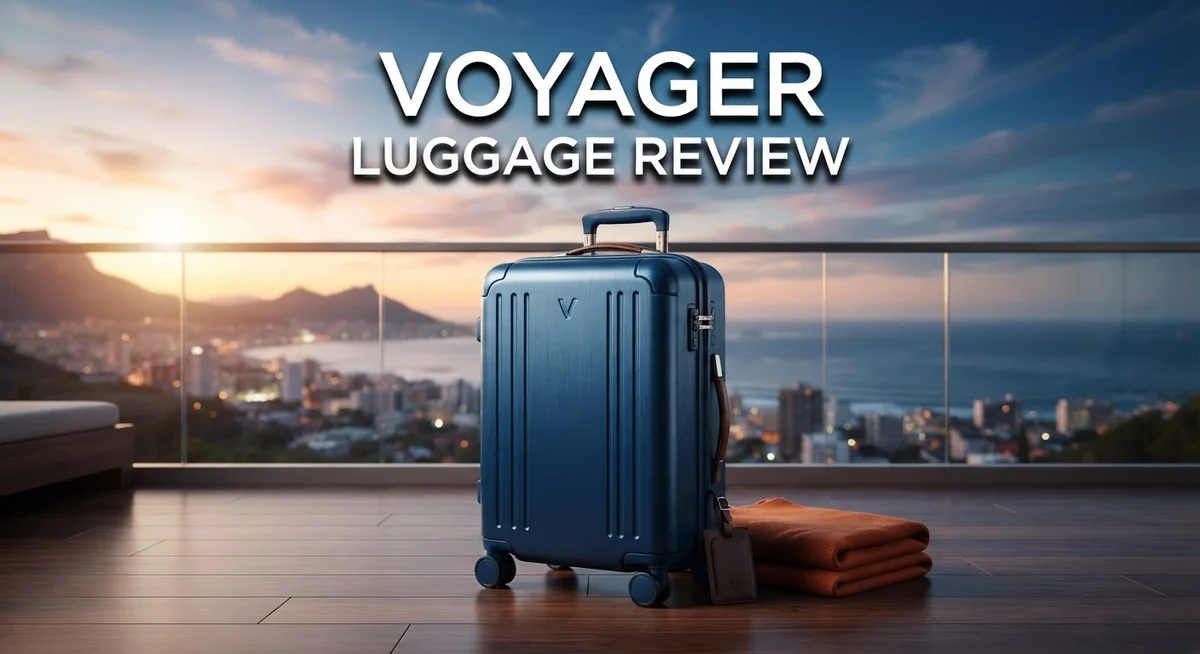
Voyager Luggage Review 2026: Live Up To The Hype?
Planning a trip soon? You need luggage that can keep up with you. Voyager luggage promises light travel and easy packing. But does it truly deliver?
This review digs into the real experience of using Voyager bags. We look at carry-on, medium, and large sizes. We also check the popular Seattle Wheeled Duffle Bag closely.
Voyager stands out for its soft-sided build. This design makes the bags much lighter than hard-shell options. You also get an expandable depth feature. This means you can pack more when you need to.
In a Nutshell
- Lightweight design. Voyager bags feel much lighter than hard-shell luggage. This makes them easy to carry and lift, even when packed.
- Expandable packing space. The soft-sided build lets you expand your bag for extra items. It gives you more room when you need it most.
- Wheel performance is mixed. The wheels roll smoothly at first. But some users report they wear out or break with frequent use.
- Customer service shines. Voyager earns strong praise for its return and exchange process. Their five star Trustpilot rating backs this up.
- Durability concerns exist. Some plastic parts feel cheap. Handles and zippers may not hold up well over time.
- Soft-sided tradeoff. You get flexibility and light weight. But you lose the sturdy protection that hard-shell luggage offers.
Material and Construction
Voyager luggage uses soft-sided construction instead of rigid hard-shell materials. This choice shapes everything about how the bag performs and feels in real travel situations.
The outer fabric on Voyager bags is typically polyester or nylon blend. These materials flex and move with you, which makes packing easier than rigid shells. The soft sides let you squeeze bags into tight overhead compartments or car trunks without fighting hard edges.
Inside the bag, the structure matters most. Voyager uses internal frames and reinforced panels to hold shape even when empty. The frame keeps wheels aligned and prevents the bag from collapsing during stacking. However, some users report that plastic components on zippers and handles feel thin compared to premium competitors.
The expandable depth feature relies on hidden zippers along the side seams. When you need extra space, these zippers open to add 1 to 2 inches of packing depth. The expanded panels still maintain bag balance, which is important for wheel performance and handling.
Wheel construction shows mixed results. Voyager includes reinforced wheels that roll smoothly on flat surfaces. The wheels are replaceable, which is practical for long-term ownership. Yet reviews mention that wheels can loosen or crack under heavy use or rough baggage handling.
The handles are where durability concerns emerge most often. Users report plastic handles becoming loose or cracking after repeated trips. The soft-sided design means handles receive direct stress when you pull or lift the bag.
Stitching quality appears consistent across Voyager models. Seams are reinforced at stress points like wheel attachment and handle bases. The thread work holds up well, though some zippers can stick if packed too tightly.
The soft-sided approach trades protection for flexibility. Your belongings get less cushioning than hard-shell luggage would provide. Fragile items need extra padding inside. But you gain lightweight carry and expandable packing space that hard shells cannot match.
Overall, Voyager construction prioritizes function over rugged durability. The materials feel adequate for casual travel but may not survive intensive frequent flying without maintenance.

Last update on 2026-10-13 / Affiliate links / Images from Amazon Product Advertising API Some of the links on this website are affiliate links, which means that at no additional cost to you, I earn a commission if you click through and make a purchase. I only recommend products and services that I believe will add value to my readers. Thank you for your support!
Size Options and Expandability
Voyager luggage comes in three main sizes that fit different travel needs. You get a carry-on option for quick trips, a medium size for weekend getaways, and a large 28 to 29 inch spinner for extended travel. Each size works with the same soft-sided construction and expandable features.
The expandability is where Voyager really shines for packing flexibility. Hidden zippers run along the side seams of each bag. You can open these zippers to increase your packing depth when you need extra room. This design works especially well if your travel plans change and you need to bring back more items than you expected.
The soft-sided build gives you practical advantages over rigid luggage. Your bag compresses into tight overhead bins more easily. You can squeeze it into awkward spaces without worrying about sharp corners. The flexibility means you fit more into less space, which matters when airlines enforce strict size limits.
Internal frames and reinforced panels keep the bag’s shape steady even when expanded. You don’t get a floppy, shapeless bag that looks deflated. The structure holds firm so your belongings stay organized and protected inside the compartments.
One important tradeoff exists with soft-sided luggage. Your items receive less cushioning than hard-shell bags provide. Fragile things like electronics or souvenirs need extra padding inside. The soft exterior absorbs bumps differently than rigid plastic or aluminum shells.
The expandable depth feature works best when you pack thoughtfully. Don’t overload the bag beyond its expanded capacity. The zippers have limits, and forcing too much inside creates stress on the seams and zippers.
For travelers who switch between weekend trips and longer vacations, the size range offers good flexibility. You can own just one carry-on for short flights or combine a medium and large bag for family travel. The expandable design means each size actually gives you more usable space than the measurements suggest.
Wheels, Handles, and Mobility
Voyager luggage moves with you, and that depends on wheels and handles working well. The wheels roll smoothly on flat airport floors and smooth pavement. You’ll notice they glide without much effort when you’re pulling your bag through terminals or hotels. However, some users report that wheels wear out faster than expected after several trips.
The handle system on Voyager bags uses a telescoping design. You extend it with one hand, and it locks into place. The grip feels comfortable during longer walks through airports. The real concern here is durability. Some travelers notice the handle mechanism becomes loose or stiff after repeated use. This happens more often than you’d want on luggage you plan to keep for years.
Voyager includes reinforced wheels as a selling point. The wheels are built tougher than budget luggage options. They handle curbs and rough surfaces better than soft-sided competitors. Still, the plastic components around the wheel assembly can feel cheap when you examine them closely. The connection points where wheels attach to the frame sometimes show wear within the first year.
The soft-sided construction actually helps with mobility in tight spaces. Your bag squeezes into overhead bins more easily than rigid hard-shell luggage. This flexibility makes maneuvering through crowded areas simpler. The trade-off is that the bag itself provides less protection when the wheels stop rolling and your luggage sits stationary.
For casual travelers who make a few trips yearly, the wheels and handles perform adequately. You get smooth rolling and easy pulling without major problems. If you travel frequently or pack heavily, you might experience frustration with handle stiffness or wheel issues sooner than expected.
The mobility features work best when you pack thoughtfully and avoid overloading. Heavier bags put more stress on wheels and the handle mechanism. Keeping your Voyager bag at reasonable weight levels extends the life of these components significantly.
Top 3 Alternatives
Samsonite Omni 2 Luggage


Last update on 2026-10-13 / Affiliate links / Images from Amazon Product Advertising API Some of the links on this website are affiliate links, which means that at no additional cost to you, I earn a commission if you click through and make a purchase. I only recommend products and services that I believe will add value to my readers. Thank you for your support!
American Tourister Carry-On Luggage

Last update on 2026-10-15 / Affiliate links / Images from Amazon Product Advertising API Some of the links on this website are affiliate links, which means that at no additional cost to you, I earn a commission if you click through and make a purchase. I only recommend products and services that I believe will add value to my readers. Thank you for your support!
Delsey Paris Luggage Collection

Last update on 2026-10-13 / Affiliate links / Images from Amazon Product Advertising API Some of the links on this website are affiliate links, which means that at no additional cost to you, I earn a commission if you click through and make a purchase. I only recommend products and services that I believe will add value to my readers. Thank you for your support!
Weight and Portability
Voyager luggage prioritizes lightweight construction, which matters most when you’re moving through airports or train stations. The soft-sided design uses polyester and nylon blends that weigh significantly less than rigid hard-shell alternatives. This means you start your journey with less dead weight, leaving more room in your baggage allowance for actual belongings.
The expandable depth feature adds another portability advantage. Hidden zippers along the side seams let you increase capacity when needed, then compress the bag back down for easier handling on return trips. This flexibility means one bag adapts to different trip lengths without forcing you to choose between multiple sizes.
Wheels make or break portability, and Voyager includes reinforced options that roll smoothly across flat airport floors. The telescoping handle system works well for casual travelers who take a few trips yearly. Together, these features let you move your luggage without excessive strain on your arms or shoulders.
However, durability concerns affect long-term portability. Some users report that handles and wheels show wear after repeated use, which impacts how easily the bag moves over time. The plastic components may not hold up as well as competitors’ offerings, meaning your lightweight bag could become harder to maneuver as it ages.
The soft-sided construction actually helps in tight spaces like overhead bins or narrow aisles. The flexible walls compress slightly, making it easier to fit your luggage into confined areas. This adaptability gives you practical advantages when maneuvering through crowded terminals or cramped hotel hallways.
Weight considerations matter most for frequent flyers. Every pound counts when you’re making multiple trips annually. Voyager’s lightweight approach works well if you travel casually and handle your luggage reasonably. Pack thoughtfully to avoid overloading, since heavier bags stress the wheels and handles more intensely. For travelers who prioritize easy movement over maximum durability, Voyager delivers solid portability for typical travel scenarios.
Durability and Long-Term Performance
Voyager luggage faces real durability challenges that matter for long-term use. Users report that plastic components break down faster than expected. Handles crack under regular travel stress, and wheels fail after several trips through airports.
The soft-sided construction creates a durability tradeoff you should understand. Soft materials flex and bend more than hard shells, which means they wear out quicker. Zippers can separate after repeated opening and closing. The fabric itself may tear if you drag the bag roughly across pavement.
Wheels represent the biggest durability concern for Voyager bags. Many users report wheel failure within the first year of regular travel. The plastic wheel housings crack easily, and the wheel axles bend when luggage gets bumped. Once wheels fail, the bag becomes nearly useless for airport travel.
Handles show similar weakness patterns. The telescoping handle mechanism can stick or refuse to retract smoothly after several months. The handle grips crack and peel away from the metal frame. Extended handles sometimes wobble, indicating loose joints that won’t tighten back up.
The good news is that Voyager offers a smooth return and exchange process. Their 5-star Trustpilot rating reflects quick replacements for broken items. If your wheels fail, you can swap the bag relatively easily. This support system helps offset durability concerns somewhat.
For casual travelers who take one or two trips yearly, Voyager luggage lasts reasonably well. Light use means less stress on weak points. However, frequent travelers face problems much faster. Business travelers who fly monthly may experience handle or wheel failure within six months.
The expandable design actually works against durability. Stretched fabric gets thinner and weaker over time. Repeated expansion cycles stress the seams and material. The deeper you expand the bag, the faster the fabric deteriorates.
Compared to competitors like Rimowa or Briggs & Riley, Voyager luggage doesn’t hold up as well. Those brands use stronger materials and better construction methods. Your Voyager bag may need replacement sooner than premium alternatives.
Pros and Cons
Pros
- Lightweight design makes moving through airports and train stations easier than hard-shell options
- Expandable depth lets you pack more when you need it without buying a larger bag
- Soft-sided construction fits into tight overhead bins and narrow aisles better than rigid luggage
- Reinforced wheels roll smoothly across flat airport floors and handle regular travel well
- Smooth return and exchange process backed by strong customer ratings
Cons
- Plastic components break down faster than competitors like Rimowa or Briggs & Riley
- Wheels and handles show weakness patterns and fail more often with regular use
- Soft-sided material offers less protection for fragile items compared to hard-shell luggage
- Expandable design sacrifices some durability and structural integrity over time
Who Should Buy It
Voyager luggage works best for specific traveler types who match its strengths and accept its limitations.
Casual travelers should consider Voyager bags. If you take one or two trips per year, this luggage holds up reasonably well. You won’t push the wheels and handles to their breaking point. The soft-sided construction fits nicely into overhead bins, which matters when you’re flying occasionally.
Business travelers on short trips benefit from the lightweight design. Moving through airports becomes easier when your bag weighs less. The expandable depth lets you pack smartly without upgrading to a larger size. Smooth airport floors work perfectly with Voyager’s reinforced wheels.
Budget-conscious buyers looking for basic functionality find value here. Voyager luggage gets you from point A to point B without fancy features. You get carry-on and larger options that handle standard travel needs.
Avoid Voyager if you travel frequently. Regular use exposes the durability problems. Wheels and handles fail more often with constant airport trips. Heavy use accelerates plastic component breakdown. If you fly multiple times monthly, invest in competitors like Rimowa or Briggs & Riley instead.
Skip Voyager for rough handling situations. Soft-sided construction offers less protection than hard-shell luggage. If baggage handlers toss your bag around, the materials won’t shield contents as well. Hard-sided alternatives provide better damage protection.
Voyager isn’t ideal for long trips. The expandable feature helps, but durability concerns grow with extended use. Taking your bag on a three week journey puts stress on weak components.
Consider Voyager if you value portability over durability. The lightweight design and soft-sided construction genuinely help in tight spaces. The expandable depth solves packing challenges. You get a smooth return process if something breaks.
The right choice depends on your travel frequency and expectations. Casual travelers and short trip flyers see good results. Frequent travelers and those seeking long-term reliability should look elsewhere.
Final Verdict
Voyager luggage delivers solid performance for everyday travel needs. It balances light construction with useful packing space. This combination makes it a practical pick for many trips.
The brand shines brightest in situations that match its design strengths. Casual trips and short getaways highlight what Voyager does best. Frequent flyers with rough handling routines should look elsewhere.
Customer support stands out as a real advantage. Voyager backs its products with quick responses and easy exchanges. This support system adds confidence when problems arise.
Think about your typical travel pattern before deciding. Occasional travelers get more value from Voyager than frequent flyers. Your usage pattern matters more than any single feature.
Handling style also plays a big role in satisfaction. Gentle loading and careful storage help these bags last longer. Rough baggage handling at airports tends to expose weak points faster.
Compare your needs against what Voyager offers before buying. Rimowa and Briggs & Riley serve travelers who need stronger builds. Voyager serves a different group with different priorities.
Set realistic expectations based on how you plan to use the bag. Voyager works well as a secondary bag for light trips. It struggles as a primary bag for heavy rotation use.
The final call comes down to matching your travel style with the product design. Buyers who value light weight and flexible packing will find good use here. Buyers who need heavy duty protection should consider other brands instead.
Voyager luggage earns a fair recommendation for the right traveler type. It performs well within its intended use case. Step outside that use case and you may face frustration sooner than expected.
Choose wisely based on your actual travel habits, not just features on paper. This approach helps you get the most value from any luggage purchase, including Voyager.
Frequently Asked Questions
Does Voyager luggage hold up during frequent travel?
Voyager bags work best for casual travelers. If you fly multiple times per month, durability becomes a real concern. The plastic components and wheel attachments show weakness patterns after heavy use. Hard-shell competitors like Rimowa handle frequent trips better. Reserve Voyager for occasional getaways or short business trips.
Can I fit everything I need in a Voyager carry-on?
Yes, the expandable depth feature gives you extra room when you pack carefully. The soft-sided construction compresses slightly, which helps squeeze items into overhead bins. You’ll fit more than a rigid carry-on of the same size. However, don’t expect miracles. Pack smart and use packing cubes to maximize space.
How does Voyager compare to Rimowa or Briggs & Riley?
Voyager costs less than premium brands. Rimowa and Briggs & Riley use stronger materials and last longer through repeated travel. Their handles and wheels rarely break. Voyager sacrifices long-term durability for lighter weight and flexibility. Choose Voyager if you value packability over longevity.
What happens if my Voyager bag breaks?
The return and exchange process runs smoothly. Voyager earns strong ratings for customer support. You can send damaged bags back without hassle. The company handles replacements quickly. This safety net helps offset durability concerns for many buyers.
Is Voyager good for rough travel conditions?
Soft-sided luggage offers less protection than hard-shell options. Rough handling at baggage claim can damage soft-sided bags more easily. If your travel involves rugged conditions or frequent throwing around, hard-shell luggage serves you better. Voyager works fine for normal airport handling.

Hi, I’m Marie Bennett, the founder of PackSmart.blog.
I write about travel essentials and Amazon gear reviews to help you pack smarter and travel lighter.
From must-have accessories to space-saving gadgets, I test and share what truly works on the road.
My mission is to make every trip stress-free and organized for travelers like you.
Join me as I explore smarter ways to travel—one bag at a time.