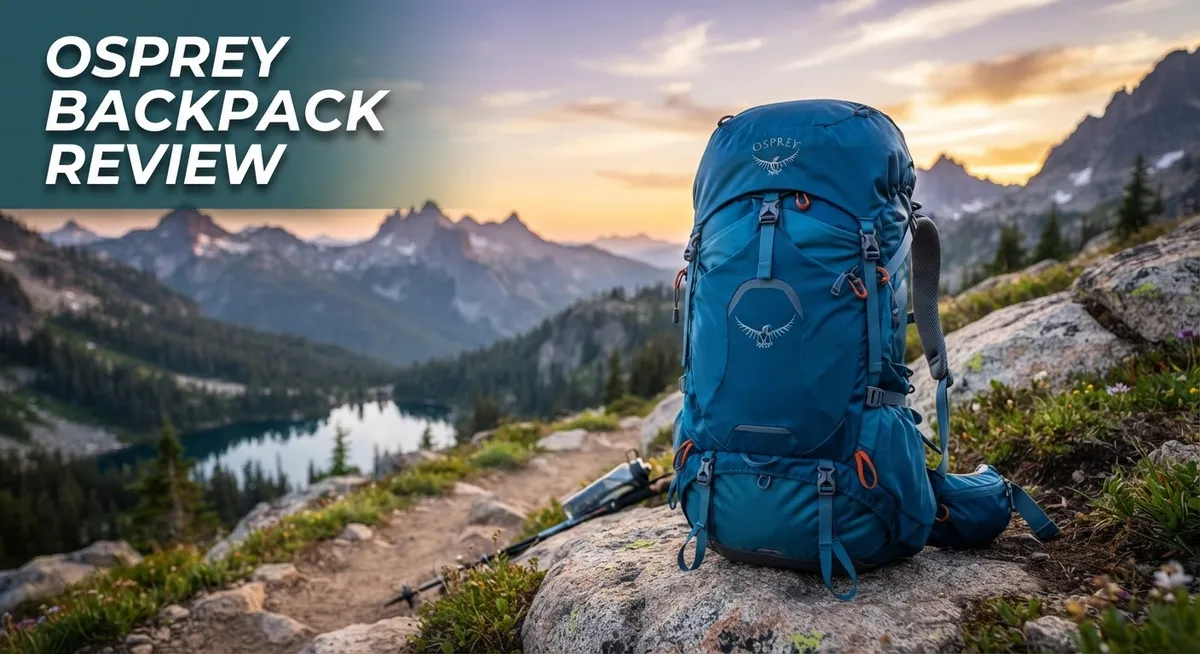
Osprey Backpack Review 2026: Complete Guide
Finding the right backpack can make or break your next adventure. Osprey has built a strong reputation among hikers, travelers, and everyday commuters alike. Their packs promise comfort, durability, and smart design.
But does Osprey really live up to the hype? This review digs into what makes these backpacks stand out.
We will look at popular models like the Porter, Fairview, and Aether AG. Each one serves a different purpose, from daily commutes to multi day treks.
You will learn about Osprey’s famous anti-gravity suspension system. This feature helps distribute weight evenly across your back.
We will also cover their lifetime warranty, a promise that sets Osprey apart from many competitors. Few brands offer this level of confidence in their products.
In a Nutshell
- Built for comfort: The suspension system spreads weight evenly. Your back and shoulders feel less strain on long trips.
- Tough and long lasting: Osprey packs handle rough trails well. They survive drops, scrapes, and bad weather with ease.
- Many sizes to pick from: You get options from small day packs to large 70L+ hiking packs. There is a fit for every trip type.
- Smart storage features: Quick access pockets let you grab gear fast. You will not dig through your whole bag for small items.
- Lifetime warranty included: Osprey fixes or replaces your pack if it breaks. This promise gives you real peace of mind.
- Some models fall short: A few packs, like the Flash, struggle in tough weather conditions. Check specific reviews before choosing this model.
Build Quality and Materials
Osprey uses premium materials across their backpack lineup. The company sources fabrics that resist tears, abrasions, and weather damage. Most models feature Cordura nylon or similar high strength textiles on high wear areas like the bottom and straps.
The suspension system relies on a special foam padding called AG (Anti Gravity). This foam molds to your back and distributes weight evenly across your shoulders and hips. The result is that heavy loads feel lighter and more balanced.
Zippers on Osprey packs are YKK brand components. These zippers open smoothly and rarely jam. They hold up well even after years of regular use. The stitching throughout each pack uses heavy duty thread that resists fraying.
The frame sheets inside many models are made from aluminum or rigid plastic. These frames keep the pack’s shape stable. They also prevent your gear from collapsing inward. On larger models like the Aether AG, the frame sits close to your back for better load transfer.
Osprey reinforces stress points with extra fabric layers. Areas like shoulder strap attachments and hip belt connections receive additional stitching. This extra reinforcement prevents tears at these vulnerable spots.
The company tests materials before using them in production. Fabrics go through abrasion tests, water resistance tests, and UV exposure tests. This process ensures that materials perform well in real world conditions.
Straps and buckles are plastic or metal hardware rated for heavy use. They click securely and adjust easily. Most clips stay tight without loosening during hikes.
The bottom of Osprey packs takes a beating on rocky trails and rough ground. That’s why Osprey covers this area with thicker, tougher fabric. This protection extends the pack’s lifespan significantly.
Overall, Osprey’s build quality reflects decades of outdoor experience. The company started in 1974 and has refined their construction methods constantly. Each pack combines durable materials with smart design choices that handle real adventure demands.

Last update on 2026-06-08 / Affiliate links / Images from Amazon Product Advertising API Some of the links on this website are affiliate links, which means that at no additional cost to you, I earn a commission if you click through and make a purchase. I only recommend products and services that I believe will add value to my readers. Thank you for your support!
Comfort and Suspension System
Osprey’s suspension system stands out because it keeps weight close to your back and distributes it evenly across your hips. This design reduces strain on your shoulders during long hikes. The Anti Gravity (AG) foam padding molds to your body shape over time, creating a custom fit that improves with use.
The hip belt is where most of the load sits. A well-designed hip belt transfers weight from your shoulders to your stronger core muscles. Osprey packs feature padded hip belts that sit snugly without digging in. This matters because even a few ounces feel heavy when worn incorrectly.
Back panel ventilation keeps air flowing between the pack and your body. Osprey uses foam with channels that allow sweat to escape. You stay cooler during warm weather hikes. The aluminum frame sheets maintain their shape even when fully loaded, preventing the pack from sagging against your back.
Shoulder straps on Osprey packs curve naturally to fit different body types. They don’t cut into your neck or dig into your collarbone. The straps include padding that cushions contact points. Adjustable load lifter straps help fine tune how the pack sits on your shoulders.
Comfort improves when you pack smart. Place heavier items in the middle of the pack, close to your spine. Put lighter gear on top and bottom. Osprey’s internal organization helps you achieve this balanced weight distribution.
Some models include a removable lid that converts into a small shoulder bag. This flexibility lets you access essentials without opening the main compartment. Quick access pockets sit at arm’s reach for snacks, maps, or sunscreen.
The suspension system works best when properly adjusted. Start with the hip belt at your natural waist, not your hips. Tighten shoulder straps just enough to stabilize the pack without pulling it upward. Load lifter straps should angle slightly backward from the pack.
Osprey tests their suspension systems on real trails with real weight. Engineers monitor how packs perform during extended use. Feedback from outdoor enthusiasts shapes each new design. This hands on approach explains why Osprey packs earn high comfort ratings from experienced hikers.
Capacity and Model Variety
Osprey offers an impressive range of backpack sizes to match different adventures. Whether you need a compact day pack or a massive expedition carrier, they have something for you.
Small day packs start at 20 to 22 liters. These work great for short hikes, commutes, or quick trips to the store. The Daylite Cinch fits perfectly in this category for minimal gear hauling.
Mid-size packs fall between 40 and 46 liters. The Porter 46L and Fairview 40L are popular choices here. These models handle weekend backpacking trips and longer day adventures without feeling bulky. The Fairpoint 40L also sits in this sweet spot for versatile outdoor use.
Large capacity packs reach 70 liters and beyond. The Aether AG 70L leads this segment for serious hikers and backpackers. These massive carriers let you bring everything you need for multi day expeditions into remote areas.
Osprey goes further by offering gender specific sizing options. Since 1974, the company has recognized that men and women have different body proportions. Women’s models feature shorter torso lengths and narrower shoulder straps. Men’s packs adjust accordingly. This attention to fit makes a real difference in comfort during long treks.
Each capacity range includes multiple model choices. You pick based on your specific needs. Someone doing rock climbing needs different features than a casual camper. Osprey builds different packs for these different purposes.
The variety extends beyond just size numbers. Quick access designs appear across multiple models. Some packs include removable lids that transform into small shoulder bags. Others feature specialized compartments for laptops, hydration systems, or camera gear.
This model diversity means you won’t settle for a pack that almost works. You find one that fits your exact use case. Whether you tackle city commutes, day hikes, or month long wilderness expeditions, Osprey has a backpack ready to go. The combination of multiple capacity options and gender specific sizing makes finding your perfect pack straightforward and practical.
Top 3 Alternatives
Deuter Speed Lite

Last update on 2026-10-15 / Affiliate links / Images from Amazon Product Advertising API Some of the links on this website are affiliate links, which means that at no additional cost to you, I earn a commission if you click through and make a purchase. I only recommend products and services that I believe will add value to my readers. Thank you for your support!
The Deuter Speed Lite works well for hikers who want a lightweight pack without sacrificing storage. This backpack features a simple design that keeps weight down while maintaining comfort on day trips and overnight adventures.
The back panel uses Deuter’s Air Mesh system. This design allows air to flow between your back and the pack, reducing sweat buildup during warm weather hikes. The shoulder straps are padded and contoured to fit most body types comfortably.
Deuter included multiple pockets for organization. Side compression straps help stabilize your load, and the pack compresses when you’re not carrying much gear. Hikers appreciate the straightforward construction that doesn’t include unnecessary features.
The North Face Borealis


Last update on 2026-10-14 / Affiliate links / Images from Amazon Product Advertising API Some of the links on this website are affiliate links, which means that at no additional cost to you, I earn a commission if you click through and make a purchase. I only recommend products and services that I believe will add value to my readers. Thank you for your support!
The North Face Borealis offers a versatile option for daily use and weekend trips. This pack balances comfort with practical storage across various compartments.
The FlexVent suspension system adapts to your back shape as you move. The padded hip belt transfers weight from your shoulders to your hips, which reduces fatigue on longer hikes. The pack sits close to your body, improving balance on uneven terrain.
Multiple pockets help you organize smaller items separately from your main gear. The front panel pocket fits laptops or tablets, making this pack suitable for both outdoor adventures and commuting. Reflective accents improve visibility in low light conditions.
Gregory Baltoro

Last update on 2026-10-15 / Affiliate links / Images from Amazon Product Advertising API Some of the links on this website are affiliate links, which means that at no additional cost to you, I earn a commission if you click through and make a purchase. I only recommend products and services that I believe will add value to my readers. Thank you for your support!
The Gregory Baltoro serves serious backpackers planning extended wilderness trips and demanding terrain. This pack handles heavy loads while maintaining good weight distribution.
Gregory’s Response A3 back panel molds to your spine shape over time. The suspension system balances comfort with load-carrying capacity, even when fully packed. The hip belt features a curved design that sits naturally on your hips.
The pack includes a removable top lid for flexibility and side pockets for quick access to water bottles or snacks. Internal organization keeps your gear separated and easy to find during camp setup.
Weight Distribution and Load Handling
Osprey backpacks excel at distributing weight across your body in ways that reduce strain. The Anti Gravity suspension system keeps the load positioned close to your spine. This design prevents the pack from pulling you backward on steep terrain.
Your hip belt carries most of the weight, not your shoulders. This is crucial because your hips are stronger than your shoulders. When adjusted properly, the belt transfers heavy loads away from your neck and upper back.
The back panel includes ventilation channels. Air flows between the foam padding and your body. You stay cooler during long hikes, even when carrying substantial weight.
Osprey uses curved shoulder straps that adapt to different body shapes. The straps don’t dig into your shoulders. They distribute pressure evenly across a wider area.
Proper packing matters as much as the pack design itself. Place heavier items in the middle of the pack, close to your spine. This keeps your center of gravity stable. Lighter gear goes in the outer pockets and top compartments.
The frame sheets inside most models are made from aluminum or rigid plastic. These materials provide structure without adding much weight. They prevent the pack from sagging when full.
Osprey tests their suspension systems on real trails with actual loads. The company doesn’t just use lab conditions. Real world testing reveals how packs perform on rocky ground and steep inclines.
Different models handle different load ranges. Day packs from 20 to 22 liters work well for light loads. Mid size packs between 40 and 46 liters balance capacity with comfort. Larger models reaching 70 liters and beyond suit extended backpacking trips.
Gender specific sizing options make a difference too. Women’s packs have shorter torso lengths and adjusted hip belt angles. Men’s packs follow different proportions. This customization improves load distribution for each body type.
The suspension system works best when you adjust it correctly. Loose straps defeat the purpose. Take time to tighten everything before hitting the trail. Your back will thank you on mile five.
Warranty and Longevity
Osprey stands behind every pack with a lifetime warranty. This guarantee covers defects in materials and workmanship for the life of the product. You won’t find many outdoor brands offering this level of confidence in their gear.
The warranty applies to all Osprey backpacks, regardless of which model you choose. Whether you own a small day pack or a massive expedition pack, you get the same protection. Osprey handles repairs or replacements if something fails due to manufacturing issues.
What makes this warranty truly valuable is how Osprey honors it. The company has a reputation for standing behind customers. If a seam splits or a strap fails unexpectedly, Osprey typically works with you to make it right. You don’t need to jump through endless hoops to get help.
Real world durability backs up this warranty promise. Osprey packs regularly outlast their owners’ needs. Many hikers report using the same pack for 10, 15, or even 20 years. The materials hold up to constant use, weather exposure, and rough handling on trails.
The suspension system proves especially durable over time. These components rarely fail because Osprey tests them extensively before release. Aluminum frames and reinforced stitching mean your pack will keep performing year after year.
Longevity also depends on how you care for your pack. Store it in a cool, dry place when not in use. Clean the exterior occasionally and allow it to air dry completely. Avoid leaving it packed in a damp basement or hot garage for months at a time.
Most owners find that their Osprey pack outlasts their interest in a particular activity. A hiking pack might transition to travel use. A travel pack might become a college backpack. This versatility extends the useful life of your investment.
Osprey’s decades of experience since 1974 shows in pack longevity. The company has refined materials and construction methods over generations. You benefit from all that accumulated knowledge every time you use your pack.
Pros and Cons
Pros
- Lifetime warranty covers every pack Osprey makes, no questions asked
- Anti-gravity suspension system keeps weight off your shoulders and on your hips where it belongs
- Quick-access pockets and convertible lids make grabbing gear fast and easy
- Curved shoulder straps fit different body shapes without custom adjustments
- Gender-specific sizing options mean women and men get packs that actually fit their frames
Cons
- Some models like the Flash don’t perform well in certain weather or terrain conditions
- Suspension systems require proper adjustment to work at their best, which takes trial and error
- Limited integrated features on entry-level day packs compared to premium models
Who Should Buy It
Osprey backpacks work best for people who need reliable gear that handles serious use. If you carry heavy loads regularly, these packs shine. The anti-gravity suspension system keeps weight off your shoulders and distributes it where your body handles it best.
Hikers and backpackers benefit most from Osprey’s range. You get options from 20L day packs to 70L+ models for multi-day trips. Whether you’re doing a short afternoon walk or a week-long adventure, Osprey has a size that fits your needs.
Women and men with different body types appreciate the gender-specific sizing. Osprey designs packs specifically for women’s frames and men’s frames. This means better fit without awkward adjustments or custom orders.
Travel enthusiasts love quick-access designs. Convertible lids and organized pockets let you grab what you need fast. You don’t have to unpack everything to find your phone or sunglasses.
People who want their gear to last decades should choose Osprey. The lifetime warranty means your pack is protected no matter what happens. This appeals to anyone tired of replacing backpacks every few years.
Outdoor enthusiasts who value comfort over minimal weight find Osprey packs ideal. The curved shoulder straps and ventilated back panels keep you comfortable even with substantial loads. This matters when you’re spending hours on the trail.
However, Osprey isn’t perfect for everyone. If you prioritize ultralight backpacking, some models may feel heavier than alternatives. If you need a pack that handles extreme weather without any issues, research specific models first. Some designs perform better in certain conditions than others.
Beginners benefit from Osprey’s straightforward designs. You don’t need experience to use these packs effectively. The suspension systems work well without constant tweaking, though proper adjustment still helps.
People who camp, climb, travel, or commute all find suitable Osprey models. The brand’s decades of experience since 1974 means they understand what different users need. You’re investing in a pack backed by real-world testing and genuine durability.
Final Verdict
Osprey backpacks earn their spot among the best outdoor gear brands. Each model serves a clear purpose, from short city trips to multi week treks.
If you want a simple daily carry, the Daylite Cinch fits that role well. For bigger adventures, the Aether AG 70L handles heavy loads without fuss.
Travelers who need flexible packing should look at the Fairpoint or Fairview 40L packs. Commuters and casual users often find the Porter 46L covers most daily needs.
When you compare Osprey to brands like Patagonia, Cotopaxi, or Aer, the difference shows in fit and function. Patagonia focuses on style, Cotopaxi leans into color and cause, Aer targets minimalist city users.
Osprey stands apart because it blends comfort, durability, and smart design into one package. Few brands match this balance across so many pack types.
That said, no single pack fits every person or trip. Your choice depends on what you carry, where you go, and how long you stay out.
If you need a pack for daily errands, skip the larger hiking models. If you plan serious backcountry trips, the smaller day packs will not cut it.
Think about your main use case first. Then match it to the right Osprey model from their lineup.
Overall, Osprey backpacks deliver strong performance across almost every category. They handle rough trails, busy airports, and daily commutes with equal skill.
The brand’s attention to fit, function, and field tested design makes it a smart pick for many outdoor and travel needs. Few competitors offer this level of consistency across such a wide range of packs.
If you want gear that works hard and keeps up with your plans, Osprey deserves a spot on your shortlist. Pick the model that matches your activity, and you will likely stick with it for years to come.
Frequently Asked Questions
Do Osprey backpacks come in different sizes for men and women?
Yes. Osprey offers gender-specific sizing for many models. Women’s packs have narrower shoulder straps and shorter torso lengths. Men’s packs follow standard proportions. This matters because a pack that doesn’t fit your frame won’t feel comfortable, even with adjustments.
Both versions carry the same features and durability. You simply get a better fit from day one. Osprey has done this since 1974, so they know what works.
What makes the suspension system so important?
The suspension system carries weight on your hips and shoulders. A good system keeps the pack stable and reduces strain on your back. Osprey’s Anti-Gravity suspension (on select models) uses curved frames and padded straps to distribute load evenly.
Here’s the catch: you need to adjust it properly. Tighten the hip belt first, then shoulder straps. This takes a few tries to get right. Once dialed in, the pack feels like it weighs less than it actually does.
Which Osprey model should I pick for day hikes?
It depends on what you carry. The Daylite Cinch works for short trips with minimal gear. The Aether AG (70L) handles multi-day treks with camping equipment. The Fairpoint and Fairview (both 40L) split the difference for full-day adventures.
Think about distance, weather, and how much food or water you need. A day pack should feel light enough to forget you’re wearing it. Osprey has options for every trip length.
How long do Osprey backpacks actually last?
Osprey backs its packs with a lifetime warranty. This means if something breaks, they repair or replace it. Many owners report their packs lasting 10+ years with regular use.
The durability comes from quality materials and stitching. Zippers, straps, and seams hold up to constant stress. Proper care (cleaning, dry storage) extends life even further.

Hi, I’m Marie Bennett, the founder of PackSmart.blog.
I write about travel essentials and Amazon gear reviews to help you pack smarter and travel lighter.
From must-have accessories to space-saving gadgets, I test and share what truly works on the road.
My mission is to make every trip stress-free and organized for travelers like you.
Join me as I explore smarter ways to travel—one bag at a time.