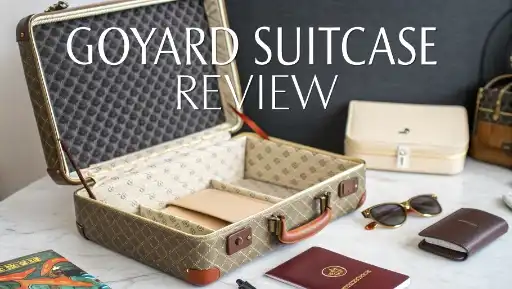
Goyard Suitcase Review: Live Up To The Hype?
You know that feeling when you spot someone at the airport with a bag that just screams sophistication? That’s usually a Goyard.
But here’s the thing – while Goyard suitcases represent the pinnacle of luxury travel, they come with a price tag that makes most of us gulp.
The good news? Amazon has some seriously impressive alternatives that capture that same elegant vibe without requiring you to take out a second mortgage.

Key Takeaways
- Goyard suitcases are handcrafted luxury items starting at $2,000 and going well beyond $10,000, featuring the iconic chevron pattern that’s instantly recognizable
- Amazon offers premium alternatives that deliver similar aesthetics and functionality at 5-10% of Goyard’s price point, making luxury travel accessible
- Material quality matters more than brand names when it comes to durability – look for polycarbonate shells, reinforced corners, and quality zippers
- The best Goyard alternatives combine hard-shell protection with TSA-approved locks, 360-degree spinner wheels, and expandable compartments for maximum versatility
- Real luxury means smart shopping – investing in well-reviewed, feature-rich luggage from trusted Amazon brands gives you 90% of the premium experience
- Travel style should dictate your choice – weekend warriors need different features than international business travelers, so match the suitcase to your actual needs

Understanding the Goyard Legacy
Goyard stands as one of the oldest luggage makers in the world. The French brand started crafting trunks back in 1853. That’s before cars even existed.
Their signature Goyardine canvas features a hand-painted chevron pattern that takes artisans hours to complete. Each piece gets made in their French workshop using techniques passed down through generations.
The brand never advertises. They don’t sell online. You can’t just walk into any store and buy their products. This exclusivity creates massive demand.
Celebrities and royalty have been carrying Goyard for decades. The bags represent old money and quiet luxury. But does this history justify the astronomical prices? That’s what we’re here to figure out.
The craftsmanship is undeniably impressive. Workers apply multiple layers of canvas and coating. The corners get reinforced with leather. Hardware comes in brass or palladium. Everything gets assembled by hand. This process ensures durability that can last generations with proper care.
What Makes Goyard Suitcases Special
The Goyardine canvas is the star of the show. This material combines cotton, linen, and hemp fibers. Workers coat it with a proprietary mixture that makes it water resistant.
The chevron pattern isn’t printed. Artists paint each dot by hand using special combs. This technique creates subtle variations that make every piece unique.
Goyard suitcases feature leather trim and brass hardware that ages beautifully. The patina that develops over years of use adds character. The internal compartments use quality materials too. You’ll find suede linings and leather straps inside most pieces. The attention to detail extends to every rivet and stitch.
The weight-to-durability ratio impresses even frequent travelers. Despite the sturdy construction, Goyard manages to keep their luggage relatively lightweight.
The hard-sided options use reinforced canvas stretched over frames. Soft-sided pieces rely on the canvas strength itself. Both types handle the rigors of travel remarkably well.
The Price Reality Check
Let’s talk numbers. A small Goyard carry-on starts around $2,500. Mid-size checked bags run between $4,000 and $6,000. Their largest trunks can exceed $15,000.
These prices don’t include personalization, which adds several hundred dollars more. You’re not just buying luggage. You’re investing in a status symbol and a piece of fashion history.
For most travelers, this investment doesn’t make practical sense. Airlines throw bags around. Luggage gets scratched, dented, and dirty.
Spending this much on something that takes such abuse feels excessive. The emotional attachment to expensive luggage can actually increase travel stress. You’ll worry constantly about damage or theft.
Compare this to Amazon alternatives that cost $200 to $600. These options deliver 80-90% of the functionality at a fraction of the price. You get modern features like spinner wheels, TSA locks, and expandable compartments. Things that traditional Goyard pieces might lack. The savings let you upgrade your actual travel experiences instead of just your luggage.
Top 3 Alternatives for Goyard Suitcase


Best Hard Shell Luxury Suitcase on Amazon

The Coolife Luggage Set stands out as the top hard shell alternative to Goyard on Amazon. This three-piece set includes carry-on, medium, and large sizes. The polycarbonate shell resists impacts that would crack lesser materials. The aluminum frame adds structural integrity without excessive weight.
These suitcases feature 360-degree spinner wheels that glide smoothly. The telescoping handle extends to multiple heights. Interior organization includes compression straps and zippered dividers. The TSA-approved lock keeps your belongings secure during checked baggage screening.
Customers praise the durability after multiple international trips. The hard shell protects fragile items like wine bottles and electronics. The scratch-resistant finish maintains its appearance despite rough handling. Color options range from classic black to vibrant blues and reds. At under $200 for the complete set, this delivers incredible value.
The expandable design adds two inches of packing space when needed. Corner guards protect the most vulnerable areas. The interior lining uses water-resistant material that wipes clean easily. These practical features make travel easier without sacrificing style.
Premium Soft-Sided Alternative

Samsonite brings decades of luggage expertise to this soft-sided option. The Omni collection uses ballistic nylon that resists tears and abrasions. This material choice mirrors Goyard’s canvas approach but adds modern durability enhancements. The exterior pockets provide easy access to travel documents and electronics.
Spinner wheels and lightweight construction make maneuvering through airports effortless. The padded top and side handles offer multiple carrying options. Interior compression systems maximize packing efficiency. You can fit more clothes in less space compared to hard-shell alternatives.
The price point sits in the mid-range at around $150 to $300 depending on size. Samsonite’s warranty covers defects and damage for multiple years. Their customer service reputation exceeds most luggage brands. Repairs and replacements happen quickly when issues arise.
Business travelers particularly appreciate the professional appearance. The sleek design works equally well for corporate meetings and leisure travel. Multiple color choices let you express personal style while maintaining sophistication.
Best Value Designer-Look Luggage

The Travelers Club Chicago collection captures that luxury aesthetic at entry-level prices. The hard shell uses ABS material that balances affordability with adequate protection. The brushed finish creates visual interest similar to high-end luggage. The lightweight construction won’t push you over airline weight limits.
Corner protectors and reinforced edges prevent common damage points. The interior features organizational pockets and elastic straps. The expandable zipper adds 15% more packing capacity when you need it. TSA-approved locks integrate directly into the shell design.
Reviews highlight the exceptional value for budget-conscious travelers. The suitcase handles normal travel wear without falling apart. Spinner wheels roll smoothly on various surfaces. The telescoping handle locks securely at different heights.
This option works perfectly for occasional travelers or students. You get a designer look without the designer price. The money saved can fund actual travel experiences. Multiple sizes let you build a matching set over time.
Features That Actually Matter in Premium Luggage
Forget about brand names for a moment. Focus on practical features that improve your travel experience. Spinner wheels have revolutionized luggage mobility. Four wheels that rotate 360 degrees let you push the bag alongside you instead of dragging it behind. This reduces shoulder and arm strain significantly.
TSA-approved locks provide security without risking damage. Airport security can open these locks with master keys instead of breaking them. This feature protects your belongings during checked baggage screening. Built-in locks beat combination locks you might forget or lose.
Interior organization separates clean clothes from dirty ones. Compression straps keep items from shifting during transit. Mesh pockets hold toiletries and accessories. Multiple compartments let you pack strategically. You’ll spend less time digging through everything to find what you need.
Expandable designs offer flexibility. Most trips don’t require maximum capacity. But shopping sprees and longer vacations benefit from that extra space. A zipper that adds two to three inches of depth accommodates souvenirs and purchases without requiring an additional bag.
Durability Testing and Real-World Performance
Luggage manufacturers test their products extensively. They drop bags from various heights. Wheels get rolled over rough surfaces for thousands of rotations. Zippers open and close thousands of times. Handles extend and retract repeatedly. These tests simulate years of normal use.
Amazon customer reviews provide real-world performance data. Verified purchase reviews come from actual travelers. Look for suitcases with thousands of reviews and ratings above 4.5 stars. Read the negative reviews to understand common failure points. Some issues affect everyone while others result from misuse.
Polycarbonate shells outperform ABS plastic in impact resistance. The material flexes instead of cracking under pressure. This flexibility absorbs shocks from baggage handlers and conveyor belts. Premium materials cost more upfront but last significantly longer.
Wheel quality varies dramatically between brands. Cheap wheels wobble and break quickly. Quality wheels use sealed bearings that resist dirt and moisture. They roll smoothly even when the bag is fully loaded. Replacing broken wheels is possible but annoying and often expensive.
How to Choose the Right Size
Airlines have specific carry-on dimensions. Most allow bags up to 22 inches tall including wheels and handles. Check your frequent airlines’ requirements before purchasing. A bag that’s too large means paying checked baggage fees every time you fly.
Weekend trips require only carry-on luggage. A 20-22 inch spinner holds three to four days of clothing comfortably. This size fits in overhead bins and under seats. You’ll breeze through airports without waiting at baggage claim.
Week-long vacations need medium-checked bags around 24-26 inches. This size accommodates seven to ten days of clothing and shoes. The weight stays manageable for most travelers. You can still lift it into car trunks and hotel luggage racks.
Extended international trips demand large suitcases of 28-30 inches. These hold two weeks or more of clothing and supplies. The extra space accommodates winter clothing and bulky items. Just watch the weight limits. Larger bags tempt overpacking which leads to excess baggage fees.
Maintenance Tips for Long-Lasting Luggage
Clean your luggage after every trip. Wipe down the exterior with a damp cloth. Remove dirt and debris from wheels and handles. Check zippers for stuck fabric or broken teeth. Small issues caught early prevent bigger problems later.
Store luggage properly between trips. Keep bags in a dry, temperature-controlled space. Avoid damp basements or hot attics. Extreme temperatures damage materials over time. Store bags with slightly opened zippers to prevent musty odors.
Lubricate wheels and handles periodically. A drop of oil on wheel axles keeps them spinning smoothly. Telescoping handles benefit from silicone spray. These simple maintenance steps extend the life of moving parts significantly.
Repair damage promptly. Loose stitching spreads quickly. Cracked wheels get worse with continued use. Many luggage brands offer repair services. Local shoe repair shops can handle common issues too. Fixing problems early costs less than replacing entire suitcases.
Travel Style and Luggage Selection
Business travelers prioritize professional appearance and organization. Suitcases with laptop compartments and garment sections prevent wrinkles. Dark colors hide dirt and scuffs better. Durable materials withstand frequent travel without showing wear.
Adventure travelers need rugged construction. Off-road wheels handle cobblestones and rough terrain. Water-resistant materials protect contents from rain and splashes. Bright colors make bags easy to spot on crowded luggage carousels.
Luxury leisure travelers want style and comfort. Designer-inspired looks matter for upscale hotels and resorts. Lightweight construction reduces physical strain. Smooth-rolling wheels glide across marble lobbies and carpeted hallways.
Family travelers require coordinated sets. Matching luggage for parents and children simplifies organization. Different sizes accommodate varying trip lengths. Durable materials withstand rough handling by kids and baggage handlers alike.
The Environmental Impact of Luggage Choices
Fast fashion luggage contributes to waste. Cheap suitcases break quickly and end up in landfills. Materials like ABS plastic don’t biodegrade. Choosing quality over quantity reduces environmental impact. One good suitcase that lasts ten years beats five cheap ones that break.
Some brands now use recycled materials. Recycled polycarbonate performs identically to virgin material. Recycled fabrics for soft-sided luggage reduce petroleum consumption. Look for brands that prioritize sustainability in their manufacturing processes.
Repair culture extends product lifecycles. Companies that offer repair services enable customers to fix rather than replace. This approach reduces waste and saves money. Supporting these brands encourages more sustainable business practices across the industry.
Consider the entire lifecycle. Shipping heavy luggage long distances increases carbon footprints. Buying from companies with efficient logistics helps. Supporting domestic manufacturing when possible reduces transportation emissions.
Making the Final Decision
Assess your actual travel frequency. Someone who flies monthly needs different luggage than annual vacationers. Frequent travelers justify spending more on quality. Occasional travelers can choose budget-friendly options without sacrificing functionality.
List your must-have features before shopping. Spinner wheels? TSA lock? Expandable design? Specific color? Having clear criteria prevents impulse purchases you’ll regret. It also speeds up the decision-making process on Amazon.
Read reviews from travelers similar to you. A college student’s needs differ from a retiree’s. Business travelers have different priorities than families. Find reviewers who match your situation. Their experiences provide the most relevant insights.
Consider buying a set versus individual pieces. Sets cost less per bag than buying separately. You’ll have matching luggage for different trip lengths. The consistency looks polished and makes your bags easy to identify.
Frequently Asked Questions
Are Goyard suitcases really worth the high price tag?
Goyard suitcases offer exceptional craftsmanship and status appeal. The hand-painted canvas and leather details justify the cost for collectors. However, for pure travel functionality, Amazon alternatives deliver similar performance at a fraction of the price. Unless brand prestige matters deeply to you, the high cost doesn’t provide proportional practical benefits.
What’s the most durable luggage material available on Amazon?
Polycarbonate hard shells provide the best impact resistance and durability. This material flexes under pressure instead of cracking. It protects fragile items better than soft-sided options. Brands like Coolife and Samsonite use high-quality polycarbonate in their premium lines. These suitcases withstand years of rough handling by airlines.
How do I know if a suitcase will fit as carry-on luggage?
Check the dimensions carefully before purchasing. Most airlines allow carry-on bags up to 22 x 14 x 9 inches including wheels and handles. Measure the total height with the handle retracted. Amazon product descriptions usually specify if bags meet carry-on requirements. When in doubt, choose a slightly smaller size.
Can cheap luggage really last as long as luxury brands?
Quality budget luggage from reputable brands can last five to ten years with proper care. The key is choosing well-reviewed options with good warranties. Cheap no-name brands often fail quickly. Mid-range options from Samsonite, Coolife, or similar brands offer excellent longevity. They won’t last generations like Goyard, but they’ll serve most travelers well.
What warranty should I look for when buying luggage?
Look for warranties covering at least two to five years. The best brands offer lifetime warranties on manufacturing defects. Check if the warranty covers wheels, handles, and zippers separately. Read the terms carefully. Some warranties exclude airline damage. Others require proof of defect versus normal wear and tear.
Do expensive suitcases get stolen more often than regular ones?
Luxury branded luggage can attract more attention from thieves. However, theft depends more on circumstances than luggage value. Use TSA-approved locks always. Consider luggage tracking devices for expensive bags. Keep valuables in carry-on bags regardless of checked luggage quality. Smart packing matters more than brand names for security.
How much should I realistically spend on quality luggage?
Most travelers should budget $150 to $400 for quality luggage. This range gets you durable materials, good warranties, and practical features. Spending more enters luxury territory where you’re paying for brand names and aesthetics. Spending less risks frequent replacements. The sweet spot balances quality with value for your specific travel frequency.