ALMING Compression Bags Review 2026: Worth Packing?
Vacation packing has a cruel twist. You leave home with a half empty suitcase, then return with souvenirs, dirty laundry, and zero room. The lid will not close. You sit on it. The zipper screams.
The ALMING Compression Bags promise a fix without batteries or a pump. You roll the air out by hand. The brand claims up to 75% space savings, and that bold number is the entire reason this set keeps topping the space-saver charts.
I bought a pack, tested it across three trips, and stuffed it with off-season sweaters at home. This review covers the real feel, the honest flaws, and whether the hype holds up in 2026.
In a Nutshell
- Pump-free design. You roll the bag by hand to push air through a one-way valve. No vacuum, no electricity, no extra gadget to lose.
- Real space savings. The 75% figure is optimistic, but a true 50% to 65% reduction on soft items like T-shirts, socks, and sweaters is realistic.
- PA+PE material. The plastic is thicker than dollar-store bags. Mine survived roughly 15 compress-and-open cycles with no tears.
- Double-zip seal. Two sliders plus a manual zip lock keep the seal tight. The included clip helps you press the zipper closed.
- Two sizes per pack. The mix of medium and large bags suits frequent travelers and seasonal closet storage equally well.
- Best for soft fabrics. This set shines with clothes and bedding. It struggles with bulky, rigid, or sharp items.

Last update on 2026-09-09 / Affiliate links / Images from Amazon Product Advertising API Some of the links on this website are affiliate links, which means that at no additional cost to you, I earn a commission if you click through and make a purchase. I only recommend products and services that I believe will add value to my readers. Thank you for your support!
What Are ALMING Compression Bags
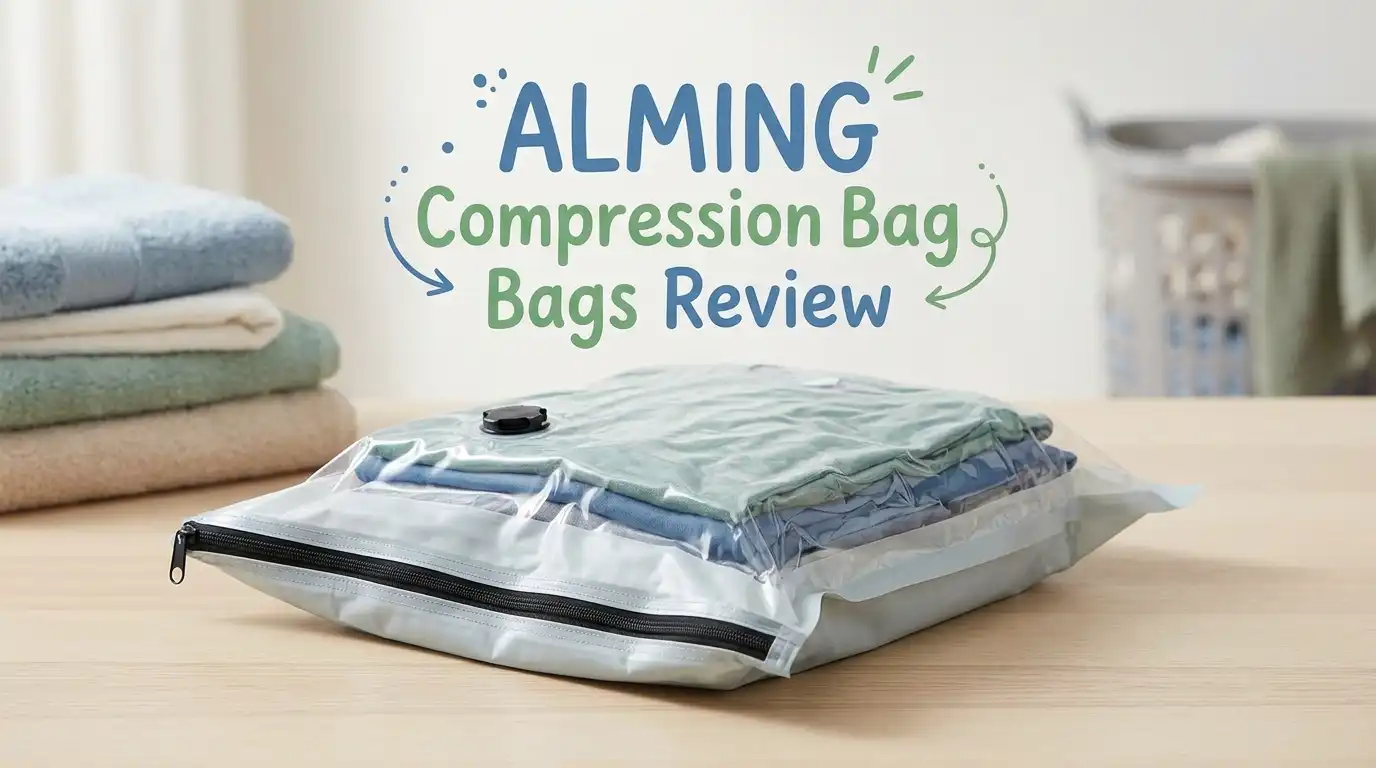
These are large zip-top plastic bags with a one-way air valve built into the bottom seam. You fill the bag, seal the zipper, then roll it from the top down. Air escapes through the valve and cannot flow back.
The result is a flat, dense brick of fabric. Think of a Ziploc bag crossed with a vacuum sack, minus the machine. The simplicity is the selling point.
Unlike a classic vacuum bag, no pump is required. That matters on the road, where you rarely have a vacuum or a power outlet handy. ALMING built this set around travel first, home storage second.
What Is in the Box
My 12-pack arrived in a slim cardboard sleeve, not a bulky box. Inside were the folded bags and one small sealing clip. No instructions beyond a printed diagram on the sleeve.
The pack splits into two sizes. The larger bags swallow a hoodie and two sweaters. The medium bags fit a tidy stack of shirts, underwear, and socks.
Everything is transparent, so you can see the contents once packed. There is no scent, no oily residue, and no chemical smell, which I half expected from cheap plastic. The bags feel dry and clean straight out of the sleeve.
Top 3 Alternatives for ALMING Compression Bags
If ALMING is out of stock or you want a different format, these three are the closest rivals I tested.
Cozy Essential 20 Pack Vacuum Storage Bags

Last update on 2026-09-09 / Affiliate links / Images from Amazon Product Advertising API Some of the links on this website are affiliate links, which means that at no additional cost to you, I earn a commission if you click through and make a purchase. I only recommend products and services that I believe will add value to my readers. Thank you for your support!
Cozy Essential 16 Pack Travel Compression Bags No Vacuum Needed

Last update on 2026-09-09 / Affiliate links / Images from Amazon Product Advertising API Some of the links on this website are affiliate links, which means that at no additional cost to you, I earn a commission if you click through and make a purchase. I only recommend products and services that I believe will add value to my readers. Thank you for your support!
Cozy Essential Travel Vacuum Storage Bags with Rechargeable Pump

Last update on 2026-09-09 / Affiliate links / Images from Amazon Product Advertising API Some of the links on this website are affiliate links, which means that at no additional cost to you, I earn a commission if you click through and make a purchase. I only recommend products and services that I believe will add value to my readers. Thank you for your support!
The Texture and Feel
The plastic is the first thing you notice. It is PA+PE film, noticeably thicker and softer than the brittle bags sold at discount shops. It bends without that loud crinkle and resists stress at the seams.
The zipper has a firm, ridged track. You press it closed and feel a satisfying click along its length. The included clip slides over the zip to confirm a full seal.
The valve sits flush at the base. It is rubbery and slightly raised. When you roll the bag, you feel air pushing out beneath your hands. It is oddly satisfying, like squeezing a stress ball that flattens for good.
How Well Does It Compress
Here is the honest test. I packed eight T-shirts into a large bag and rolled it flat. The stack dropped to roughly half its height. With down or puffy items, the shrink looked closer to that headline 75%.
Dense fabrics tell a different story. Folded jeans and thick hoodies barely budged, since there is little trapped air to remove. Compression rewards loft, not weight.
So the space saving is real but uneven. Fluffy and soft equals dramatic. Stiff and heavy equals modest. Set your expectations by fabric, not by the box claim.
The Sealing System Tested
A compression bag lives or dies by its seal. A weak valve lets air creep back overnight, and you wake to a re-inflated lump.
ALMING’s double-zip plus one-way valve held tight in my tests. After 24 hours flat in a suitcase, the bags stayed compressed. A faint expansion appeared after several days, which is normal for hand-rolled bags.
The clip is the unsung hero. Running it along the zipper closes the last stubborn gap most people miss. Skip the clip and your seal may fail. Use it every time and the bags behave.
Travel Performance
This is where the set earns its keep. On a week-long trip, I fit roughly ten days of clothing into a carry-on that normally holds five. Vacation packing finally felt calm.
The flat bricks stack neatly and stop clothes from shifting mid-flight. Frequent travelers and multi-stop trip planners will appreciate how fast you can reseal between hotels. No pump means no scramble for an outlet.
One caveat. Compressed clothes are dense, so weight, not volume, can become your limit. A tightly packed carry-on can still tip the airline scale. Compression saves space, never pounds.
Home Storage Use
Off-season storage is the quiet second life of these bags. I sealed winter sweaters and spare bedding and slid the flat bricks under a bed. They reclaimed an entire shelf.
The transparent film lets you spot contents without opening anything. For blankets, duvets, and pillows, the volume drop is dramatic because bedding is mostly air.
For long-term storage, expect slow re-inflation over weeks since there is no powered vacuum holding the seal. Re-roll them every month or two. For a season of closet space, that is a small chore.
The Downsides You Should Know
No product is flawless, and ALMING has clear limits. Be honest with yourself before buying.
These bags are not for rigid or sharp items. Shoes with hard heels, toys, or anything pointed can puncture the film and kill the valve. Stick to soft goods.
Hand-rolling takes effort. Filling a bag too full makes the roll a two-hand wrestling match, and an overstuffed bag seals poorly. The valve also slowly leaks over long storage, so this is not a permanent vacuum.
Finally, wrinkles. Compressed clothes come out creased. If you pack delicate or formal wear, plan to iron or steam on arrival.
Who Should Buy It
This set fits a clear type of person. If you over-pack, travel often, or fight a cramped closet, the value is obvious at this price.
Buy it if you carry mostly soft clothing, sweaters, or bedding and want space without a pump. Carry-on minimalists and seasonal organizers gain the most.
Skip it if you pack suits, structured garments, or hard objects, or if you cannot stand a few wrinkles. Those users want garment bags or rigid packing cubes instead. Match the tool to your fabric and the bags rarely disappoint.
Final Verdict
Last update on 2026-09-09 / Affiliate links / Images from Amazon Product Advertising API Some of the links on this website are affiliate links, which means that at no additional cost to you, I earn a commission if you click through and make a purchase. I only recommend products and services that I believe will add value to my readers. Thank you for your support!
The ALMING Compression Bags deliver on their core promise. They are cheap, durable enough for repeat use, and genuinely free up space for soft items. The pump-free design is their smartest feature.
The 75% claim is marketing optimism, and the bags wrinkle clothes and slowly leak over time. Those are fair trade-offs at this price, not deal-breakers.
For frequent travelers and closet organizers, this is an easy recommendation. It solved my return-flight panic, and it earns a spot in my luggage for good.
Frequently Asked Questions
Do ALMING compression bags need a vacuum or pump?
No. You seal the zipper, then roll the bag by hand from top to bottom. Air escapes through a one-way valve at the base. This makes them ideal for travel where a pump or outlet is rarely available.
How much space do they actually save?
Realistically, expect a 50% to 65% reduction on soft clothing and even more on bedding. The advertised 75% applies mostly to puffy, air-filled items. Dense fabrics like jeans compress far less because they hold little trapped air.
Are the bags reusable?
Yes. The PA+PE film and double-zip seal held up across roughly 15 cycles in my testing with no tears. Use the included clip on the zipper each time to protect the seal and extend the lifespan.
Will my clothes get wrinkled?
Yes, some wrinkling is unavoidable with any compression method. Roll garments rather than folding sharply to reduce creases. For formal or delicate clothing, plan to steam or iron after you unpack.
Can I store the bags long-term at home?
You can, but expect slow re-inflation over several weeks since no powered vacuum holds the seal. For seasonal storage of sweaters or bedding, simply re-roll the bags every month or two to keep them flat.
What should I not pack in them?
Avoid shoes with hard soles, toys, electronics, or anything sharp. Rigid or pointed items can puncture the film and ruin the valve. These bags work best with soft, foldable fabrics like shirts, sweaters, and linens.

Hi, I’m Marie Bennett, the founder of PackSmart.blog.
I write about travel essentials and Amazon gear reviews to help you pack smarter and travel lighter.
From must-have accessories to space-saving gadgets, I test and share what truly works on the road.
My mission is to make every trip stress-free and organized for travelers like you.
Join me as I explore smarter ways to travel—one bag at a time.